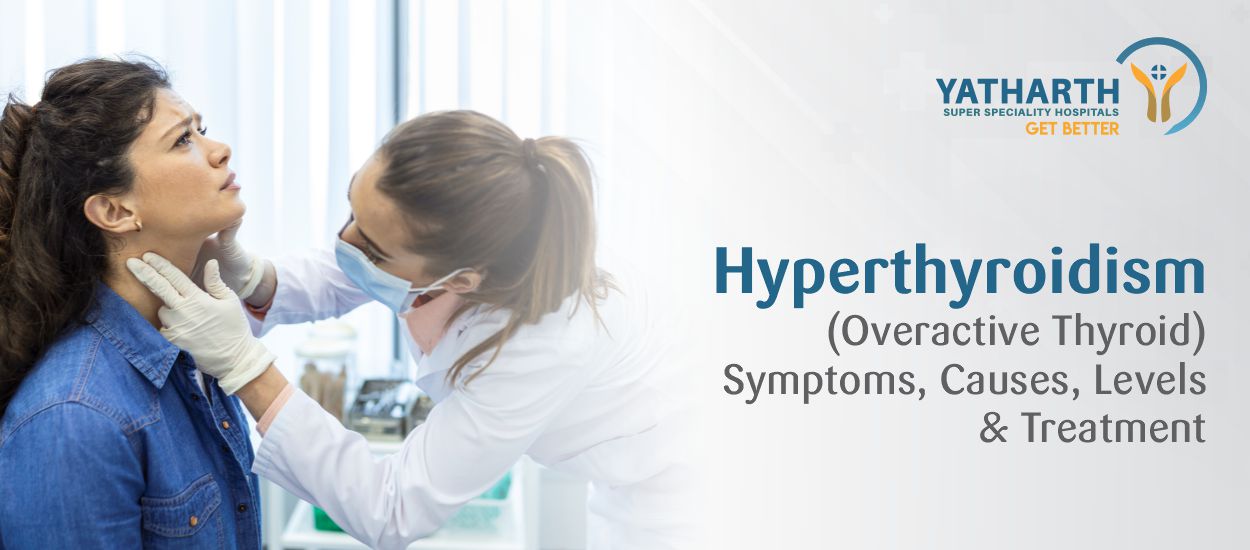


The thyroid gland plays an important role in keeping the body functioning as it should. But when this small gland produces more hormones than the body needs, it can affect several bodily functions, ranging from heart rate and metabolism to energy levels and mood. These changes may seem unrelated at first, but they could be signs of hyperthyroidism, commonly known as an overactive thyroid. Understanding what causes this condition and how it affects your body can help you recognise potential concerns and seek timely care. In this guide, we'll explore hyperthyroidism symptoms, causes, thyroid hormone levels, diagnosis and treatment options, along with when to seek medical advice.
What is Hyperthyroidism?
Hyperthyroidism is a condition in which the thyroid gland produces more thyroid hormones than the body needs. This small, butterfly-shaped gland is located at the front of the neck and produces thyroxine (T4) and triiodothyronine (T3).
These hormones regulate metabolism, which determines how quickly the body uses energy. They also influence several essential functions, including heart rate and body temperature. When the thyroid produces excessive amounts of these hormones, the body's metabolic processes speed up, affecting how different organs and systems function.
Thyroid hormone levels and the severity of hyperthyroidism can vary from person to person, depending on the underlying cause and other health factors. Understanding these differences helps doctors assess the condition and recommend an appropriate treatment approach.
Symptoms of Hyperthyroidism
Excess thyroid hormones can affect several organs and body systems. Common symptoms include:
- Rapid or irregular heartbeat: The heart may beat faster than usual or feel as though it is pounding or fluttering.
- Unexplained weight loss: Weight may decrease despite a normal or increased appetite.
- Anxiety and irritability: Individuals may feel unusually nervous, restless or emotionally unsettled.
- Tremors: The hands may shake, particularly when held out.
- Excessive sweating and heat intolerance: Individuals may feel unusually warm or sweat more than usual.
- Sleep difficulties: Increased nervous system activity can make it difficult to fall or stay asleep.
- Fatigue and muscle weakness: Increased metabolic activity can contribute to tiredness and weakness, particularly in the upper arms and thighs.
- Frequent bowel movements: Some individuals experience more frequent bowel movements or diarrhoea.
- Menstrual changes: Menstrual periods may become lighter, less frequent or irregular.
- Neck swelling: An enlarged thyroid gland, known as a goitre, may cause visible swelling at the front of the neck.
- Eye symptoms: Graves’ disease can cause eye irritation, redness, swelling or, in some cases, protrusion of the eyes.
Not everyone experiences all these symptoms, and their severity varies from person to person. Therefore, persistent palpitations, unexplained weight loss, tremors or several symptoms occurring together warrant medical assessment.
Causes of Hyperthyroidism
Hyperthyroidism develops when the thyroid produces excessive hormones or when inflammation releases stored thyroid hormones into the bloodstream. The main causes include:
Graves’ Disease
Graves’ disease is an autoimmune condition and a common cause of hyperthyroidism. The immune system produces antibodies that stimulate the thyroid gland to make excess hormones. It can also affect the tissues around the eyes, causing thyroid eye disease.
Overactive Thyroid Nodules
Thyroid nodules are lumps that develop within the gland. Some nodules produce thyroid hormones independently of the body's normal regulatory signals. One or more overactive nodules can therefore cause hyperthyroidism.
Thyroiditis
Thyroiditis refers to inflammation of the thyroid gland. In some forms, inflammation causes stored thyroid hormones to leak into the bloodstream, temporarily increasing hormone levels. This can occur after pregnancy or following certain inflammatory conditions.
Because thyroiditis does not necessarily involve increased hormone production, antithyroid medicines may not help. Treatment depends on the type of thyroiditis and the symptoms.
Excess Iodine Exposure
The thyroid uses iodine to produce hormones. In susceptible individuals, excessive iodine exposure from certain medicines, supplements or other sources can trigger hyperthyroidism.
Excess Thyroid Hormone Medication
Taking more thyroid hormone medication than prescribed can raise circulating hormone levels and cause symptoms of excess thyroid hormone. The doctor reviews the medication and adjusts the dose when necessary.
Identifying the cause matters because treatment for Graves’ disease, overactive nodules and thyroiditis can differ significantly.
Hyperthyroidism Levels: Understanding TSH, T3 and T4
Doctors use thyroid function tests to assess hormone levels and determine whether the thyroid is overactive. The results need to be interpreted together rather than in isolation.
TSH Levels in Hyperthyroidism
Thyroid-stimulating hormone (TSH) is produced by the pituitary gland, which regulates thyroid hormone production. When circulating thyroid hormones rise, the pituitary usually reduces TSH production.
As a result, a low TSH level commonly indicates possible hyperthyroidism, particularly when Free T4 or Free T3 is elevated. However, a low TSH result alone does not establish the diagnosis.
Free T3 and Free T4 Levels
T3 and T4 are the main hormones produced by the thyroid. Blood tests often measure their free forms, which are not bound to proteins in the bloodstream.
- High Free T4 and/or Free T3: These results, together with low TSH, commonly indicate overt primary hyperthyroidism.
- Normal Free T4 and Free T3 with low TSH: This pattern may indicate subclinical hyperthyroidism.
- Normal TSH and thyroid hormone levels: These results generally indicate normal thyroid function, although the doctor may investigate further if symptoms or other findings warrant it.
The exact reference ranges depend on the laboratory and testing method. Pregnancy, certain medicines, severe illness and other medical conditions can also affect interpretation.
Subclinical vs Overt Hyperthyroidism
The distinction helps doctors determine the next steps.
|
Feature |
Overt hyperthyroidism |
Subclinical hyperthyroidism |
|
TSH |
Usually low or suppressed |
Low or suppressed |
|
Free T4 and Free T3 |
One or both may be elevated |
Usually within the reference range |
|
Symptoms |
May be noticeable or severe |
Often absent or mild |
|
Management |
Usually requires treatment based on the cause |
May require monitoring or treatment depending on risk factors |
A doctor may repeat thyroid function tests before making a treatment decision, particularly when the results suggest subclinical hyperthyroidism. Age, symptoms, heart health, bone health and the degree of TSH suppression help guide management.
Hyperthyroidism Diagnosis
Accurate diagnosis is essential for guiding appropriate treatment. A doctor may recommend the following assessments and investigations:
Medical History and Physical Examination
The doctor reviews symptoms, their duration, changes in body weight, medication use and relevant medical history. The examination may include checking the pulse, blood pressure, hands, eyes and thyroid gland for signs of overactivity or enlargement.
Thyroid Function Tests
Blood tests usually include TSH and Free T4. The doctor may also request Free T3, particularly when TSH is low but Free T4 remains within the reference range.
Thyroid Antibody Tests
If Graves’ disease is suspected, the doctor may request thyroid receptor antibodies or other relevant antibody tests. These can help identify an autoimmune cause.
Imaging and Additional Investigations
A radioactive iodine uptake test or thyroid scan may help distinguish Graves’ disease from overactive nodules or thyroiditis when the cause remains unclear. Thyroid ultrasound may be useful when the gland is enlarged or nodules are present.
The doctor selects investigations according to the clinical findings. Radioactive iodine uptake testing is not suitable during pregnancy or breastfeeding.
Treatment for Hyperthyroidism
Hyperthyroidism treatment aims to control excess thyroid hormone activity, relieve symptoms and reduce the risk of complications. The choice depends on the underlying cause, symptom severity, age, other medical conditions and pregnancy status.
Antithyroid Medicines
Medicines such as carbimazole or methimazole reduce thyroid hormone production. Propylthiouracil may be preferred in certain situations, including selected cases during early pregnancy.
These medicines are commonly used for Graves’ disease and some other causes of hyperthyroidism. Treatment may continue for months or longer, depending on the response and risk of recurrence. Doctors monitor thyroid function and assess potential side effects during treatment.
Medicines to Control Symptoms
Beta-blockers can reduce symptoms such as a rapid heartbeat, tremors and nervousness while the underlying cause is being treated. They control the effects of excess thyroid hormones but do not reduce hormone production.
Radioactive Iodine Therapy
Radioactive iodine is taken orally and absorbed by thyroid cells, gradually reducing the gland's ability to produce hormones. Doctors may recommend it for selected cases of Graves’ disease or overactive thyroid nodules.
This treatment is unsuitable during pregnancy and breastfeeding. It can also lead to hypothyroidism, which requires long-term thyroid hormone replacement.
Thyroid Surgery
A surgeon may remove part or all of the thyroid gland in selected cases. Surgery may be considered when the gland is significantly enlarged, nodules cause concern, other treatments are unsuitable or symptoms persist despite treatment.
After total thyroid removal, the body cannot produce sufficient thyroid hormone, so lifelong thyroid hormone replacement is necessary.
Treatment is not the same for every cause of hyperthyroidism. For example, thyroiditis may require symptom control and monitoring rather than antithyroid medicines. An endocrinologist can explain the benefits, risks and expected follow-up for each suitable option.
When Should You Consult an Endocrinologist?
Persistent symptoms or abnormal thyroid function tests warrant medical assessment. An endocrinologist can investigate whether the symptoms result from hyperthyroidism, identify the cause and determine whether treatment or monitoring is appropriate.
Consider consulting an endocrinologist if there is:
- A persistently rapid or irregular heartbeat
- Unexplained weight loss despite normal or increased appetite
- Ongoing tremors, excessive sweating or heat intolerance
- Persistent anxiety or sleep difficulties accompanied by other symptoms
- Swelling at the front of the neck
- Abnormal TSH, Free T3 or Free T4 results
- A known thyroid disorder requiring treatment review
- Hyperthyroidism during pregnancy or when planning pregnancy
Seek emergency medical care for severe symptoms such as a very rapid heartbeat accompanied by high fever, confusion, marked agitation or loss of consciousness. These may indicate a serious complication, including thyroid storm.
Endocrinology Care at Yatharth Super Speciality Hospitals
Proper hormone regulation is essential for maintaining metabolism, heart rate, energy levels, and overall health. At Yatharth Super Speciality Hospitals, our endocrinologists provide care for thyroid disorders, including hyperthyroidism and Graves’ disease, helping patients understand their condition and receive appropriate treatment.
The endocrinologists evaluate symptoms and thyroid function test results to identify the underlying cause and develop an individualised treatment plan, with follow-up to monitor progress and adjust treatment when needed.
For individuals experiencing symptoms of an overactive thyroid or abnormal thyroid test results, it is advisable to consult an endocrinologist as soon as possible.