For women with chronic gynecological conditions that impact their health and quality of life, a hysterectomy can be a safe and effective option. At Yatharth Hospital, we offer various hysterectomy procedures, prioritizing safety, quicker recovery, and compassionate care.
Our Department of Obstetrics & Gynaecology provides personalized treatment plans, using minimally invasive and open surgical methods to ensure the best approach for each patient.
Hysterectomy or uterus removal operation is a surgical procedure to remove the uterus. Depending on the medical condition, it may also involve removal of the cervix, ovaries, fallopian tubes, or surrounding tissues.
After hysterectomy, menstrual periods stop permanently, and pregnancy is no longer possible. The surgery is recommended only when other treatments are ineffective or unsuitable.
Common reasons for a hysterectomy include:
Uterine fibroids causing heavy bleeding or pain
Endometriosis or adenomyosis
Chronic pelvic pain
Abnormal uterine bleeding
Gynecologic cancers (uterus, cervix, ovaries)
Our specialists carefully evaluate each case before recommending surgery.
Understanding the 5 types of hysterectomy helps patients make informed decisions:
1. Total Hysterectomy: Total hysterectomy involves removal of the uterus and cervix. It is the most commonly performed type.
2. Partial (Subtotal) Hysterectomy: Only the uterus is removed, and the cervix is preserved.
3. Radical Hysterectomy: Radical hysterectomy includes removal of the uterus, cervix, surrounding tissues, and part of the vagina—usually recommended for cancer treatment.
4. Type 2 Hysterectomy: Type 2 hysterectomy involves removal of the uterus with partial removal of surrounding tissues, often used in early-stage gynecologic cancers.
5. Type 3 Hysterectomy: Type 3 hysterectomy is a more extensive form where the uterus, cervix, and a wider area of surrounding tissues are removed, typically for advanced cancer cases.
The hysterectomy operation is performed using the most suitable technique based on diagnosis:
Laparoscopic (minimally invasive) hysterectomy
Vaginal hysterectomy
Abdominal (open) hysterectomy
Each uterus removal surgery is planned with precision, ensuring minimal discomfort and optimal outcomes.
Life after uterus removal varies from patient to patient:
Menstrual periods stop permanently
Relief from pain, bleeding, or pressure symptoms
Hormonal changes may occur if ovaries are removed
Emotional adjustment and physical healing take time
Our team provides complete physical and emotional support during this transition.
Possible uterus removal side effects may include:
Temporary pain and fatigue
Hormonal changes (if ovaries are removed)
Mood changes
Vaginal dryness
Early menopause (in some cases)
These effects are managed with proper medical guidance and follow-up care.
Uterus removal surgery recovery time depends on the surgical method:
Minimally invasive hysterectomy: 2–4 weeks
Open hysterectomy: 4–6 weeks
Patients are advised rest, gradual activity resumption, and follow-up visits for smooth recovery.
Experienced gynecologists and surgeons
Advanced laparoscopic and open surgery options
Personalized care for benign and cancerous conditions
Modern operation theatres and post-operative monitoring
Trusted center for hysterectomy in Noida
At Yatharth Hospital, we provide safe, advanced, and compassionate uterus removal surgery (hysterectomy) in Noida, helping women regain comfort, confidence, and long-term health.
Book a gynecology consultation today for expert evaluation and personalized treatment planning.
India’s leading specialists.
MBBS, MD (Obstetrics & Gynaecology), FICOG, FICMCH, FIMSA
Gynaecology & Obstetrics
MBBS, MS (Gynaecology & Obstetrics)
Gynaecology & Obstetrics

MBBS, MD (Obstetrics & Gynaecology)
Gynaecology & Obstetrics

MBBS, DGO, DNB
Gynaecology & Obstetrics
Robotic Surgery
Becoming a mother again at 40 was emotional, but I felt completely safe in the hands of Dr. Sonal Bathla. Nancy Chadha shares her...

Becoming a mother again at 40 was emotional, but I felt completely safe in the h...

This video highlights the successful outcome of a Complex Total Knee Replacement...

Meet Mr. Satish Chand Chawla, who underwent HOLEP – Holmium Laser Enucleation ...
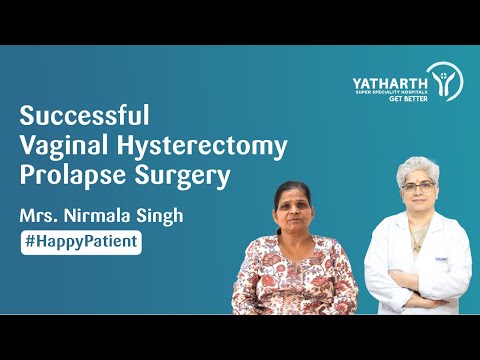
Meet Mrs. Nirmala Singh, who underwent a Successful Vaginal Hysterectomy Prolaps...
Mr. Sanjay Kaushik’s journey is a powerful story of hope and recovery after ba...

Babies are fascinating tiny beings who reserve their most creative thinking for the womb. Their inventive tendencies are...
If you are suffering from PCOD or PCOS, do not worry. You are not alone. When we look at the statistics in India, about ...

Menopause is a natural biological process that occurs when a woman's reproductive years come to an end. It usually occur...