

46% of adults worldwide have hypertension, based on clinical estimates from the American Heart Association (NCBI). Blood pressure uses a two-number measurement expressed in mm Hg, such as 120/80 mm Hg, where the first value represents systolic pressure and the second represents diastolic pressure. Normal blood pressure is defined as less than 120/80 mm Hg, which serves as the baseline for evaluating all BP levels.
120 mm Hg reflects the pressure during heart contraction, while 80 mm Hg represents pressure between beats. These two values form the core of blood pressure classification used in India and global clinical guidelines. Any deviation from this range places individuals into elevated, hypertension, or hypotension categories based on fixed numeric thresholds.
Adults in Delhi follow the same clinical benchmarks defined by national and international health authorities, including thresholds such as ≥130/80 mm Hg for hypertension and <90/60 mm Hg for hypotension. These values guide diagnosis, classification, and monitoring across age groups.
Normal Blood Pressure Benchmark
120/80 mm Hg defines normal blood pressure for healthy adults based on clinical guidelines from the American Heart Association.
Key Numeric Benchmarks
- <120 systolic and <80 diastolic → Classified as normal blood pressure
- 120–129 systolic and <80 diastolic → Classified as elevated blood pressure
- ≥130 systolic or ≥80 diastolic → Classified as hypertension
- ≥180 systolic and/or ≥120 diastolic → Defined as hypertensive crisis
Interpretation of 120/80 mm Hg
120 mm Hg reflects the upper limit of normal systolic pressure. Values above this indicate increased arterial force during heart contraction.
80 mm Hg reflects the upper limit of normal diastolic pressure. Values above this indicate increased resistance during heart relaxation.
2-value interpretation is mandatory. A reading such as 130/78 mm Hg still qualifies as hypertension because systolic exceeds 130 mm Hg.
Clinical Relevance for Adults in Delhi
≥130/80 mm Hg serves as the diagnostic threshold for hypertension under Indian (NHM) and global guidelines. This value determines when clinical monitoring or intervention begins.
<120/80 mm Hg remains the target range for adults across all age groups unless specific medical conditions alter thresholds.
Repeated readings over 2 or more measurements are required before confirming classification, as single readings may vary due to temporary factors such as stress or activity.
Blood Pressure Categories: Normal to Hypertensive Crisis
4 clinically defined categories classify blood pressure based on fixed numeric thresholds. These categories determine whether BP is normal, elevated, or requires medical attention.
Category Breakdown with Numeric Ranges
Normal Blood Pressure
- Systolic: <120 mm Hg
- Diastolic: <80 mm Hg
Elevated Blood Pressure
- Systolic: 120–129 mm Hg
- Diastolic: <80 mm Hg
Hypertension Stage 1
- Systolic: 130–139 mm Hg
- Diastolic: 80–89 mm Hg
Hypertension Stage 2
- Systolic: ≥140 mm Hg
- Diastolic: ≥90 mm Hg
Hypertensive Crisis
- Systolic: ≥180 mm Hg and/or
- Diastolic: ≥120 mm Hg
Normal Blood Pressure by Age in Delhi (Age-Wise Chart + Meaning)
Blood pressure increases progressively after age 40 due to arterial stiffness and vascular changes, based on data from the Heart Research Institute. Age-specific ranges provide contextual interpretation but do not replace standard clinical thresholds.
Age-Wise Blood Pressure Chart (Adults)
18–29 years
- Average: 110–120 systolic / 70–80 diastolic
30–39 years
- Average: 115–125 systolic / 75–82 diastolic
40–49 years
- Average: 120–130 systolic / 80–85 diastolic
50–59 years
- Average: 125–135 systolic / 80–88 diastolic
60+ years
- Average: 130–140 systolic / 80–90 diastolic
Interpretation of Age-Based BP Ranges
120/80 mm Hg remains the standard normal benchmark across all age groups. Age-related increases do not redefine normal thresholds but indicate observed averages.
130–140 mm Hg systolic becomes more common after age 50. However, readings ≥130/80 mm Hg still fall under hypertension classification regardless of age.
140/90 mm Hg should not be considered normal at any age. This level meets Stage 2 hypertension criteria under clinical guidelines.
Clinical Application for Adults in Delhi especially Model Town
2 frameworks must be used together:
- Category-based thresholds (normal, elevated, hypertension)
- Age-based averages (contextual variation)
Age charts help identify trends but do not override diagnostic cutoffs.
- 135/85 mm Hg at age 55 → Hypertension (not normal for age)
- 118/78 mm Hg at age 65 → Normal BP despite higher age group average
2–3 readings across different days are required to confirm BP status in adults, as age alone does not determine classification.
BP Measurement Method for Adults
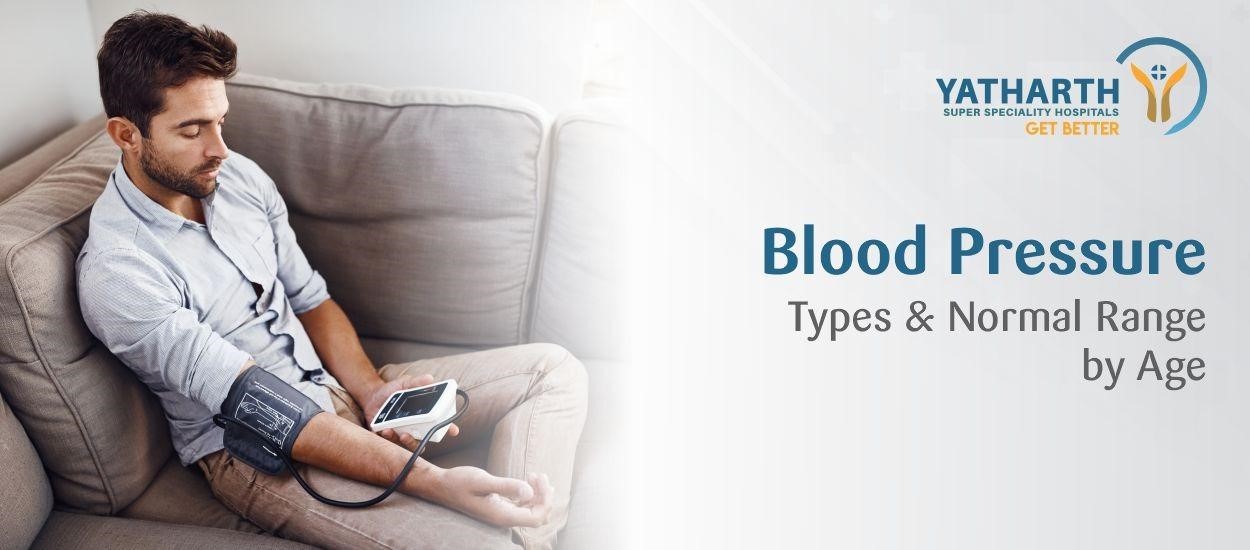
5–10 minutes of rest before measurement is required to obtain an accurate blood pressure reading.
Correct Measurement Steps
- Sit upright with back supported and feet flat on the floor
- Keep arm at heart level during measurement
- Use a validated digital or manual BP monitor
- Avoid caffeine, smoking, or exercise 30 minutes before reading
- Take 2–3 readings with 1-minute intervals
Common Measurement Errors
- Measuring immediately after physical activity
- Incorrect cuff size usage
- Talking during measurement
- Unsupported arm position
2 incorrect conditions can alter readings by 5–15 mm Hg, affecting classification accuracy.
When to Check Blood Pressure?
Morning readings provide the most consistent baseline for BP evaluation.
Recommended Timing
- Measure BP within 1 hour of waking
- Take readings before medication (if prescribed)
- Maintain same time daily for consistency
Frequency Per Session
2 readings per session with 1-minute gap improve accuracy. Avoid measuring immediately after meals or physical exertion.
BP Devices Used in Delhi (Digital vs Manual Accuracy)
2 primary device types are used for BP measurement in clinical and home settings.
Digital BP Monitors
- Automated readings with display screen
- Commonly used for home monitoring
- Require correct cuff placement for accuracy
Manual BP Monitors (Sphygmomanometer)
- Used in hospitals and clinics
- Requires stethoscope and trained operator
- Provides controlled measurement environment
1 validated device ensures consistent readings. Device calibration affects measurement reliability.
Conclusion
120/80 mm Hg defines the standard reference point for normal blood pressure, while ≥130/80 mm Hg marks the threshold for hypertension under Indian and global guidelines. Blood pressure classification depends on two values systolic and diastolic and requires 2–3 readings for accurate categorization.
Age-based variations may influence average readings, but they do not change diagnostic thresholds. ≥180/120 mm Hg remains a critical emergency level, while <90/60 mm Hg defines hypotension. Adults in Delhi must rely on category-based ranges, not age assumptions, to interpret BP levels correctly.
Consistent measurement, correct interpretation, and threshold-based classification form the basis of blood pressure monitoring across all adult age groups.
Hypertension requires clinical evaluation under standard hypertension guidelines. Accurate diagnosis depends on validated equipment, repeated measurements, and professional interpretation.
Yatharth Hospitals in Model Town, Delhi provide structured blood pressure screening using calibrated devices and standardized protocols aligned with NHM and global cardiovascular guidelines.