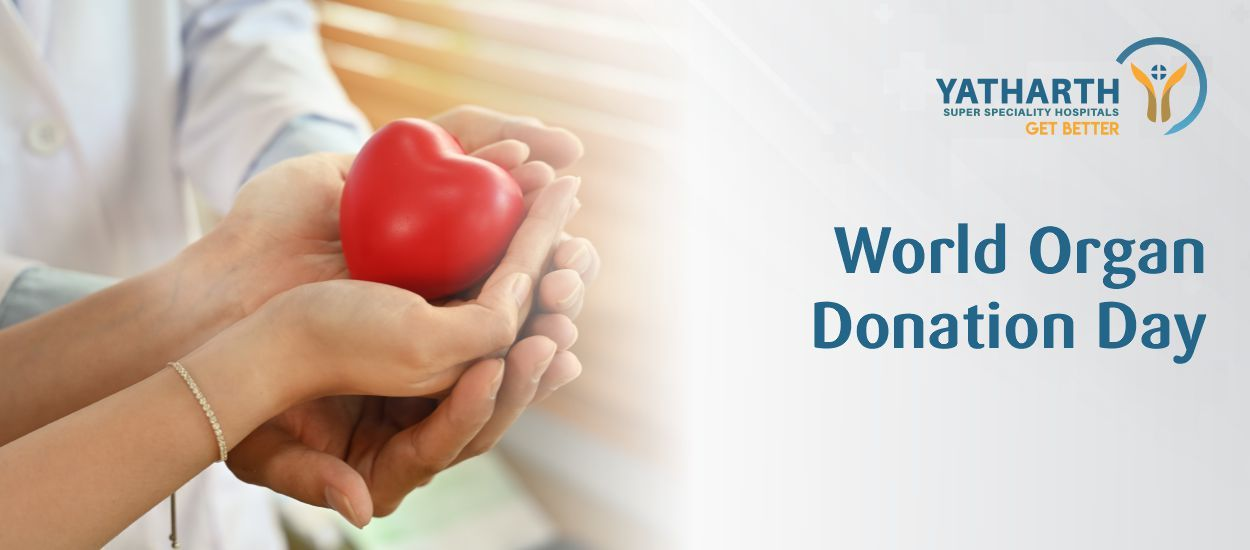


World Organ Donation Day – 13 August 2026
World Organ Donation Day is observed annually on 13th August to raise awareness about the importance of organ and tissue donation and to encourage individuals to pledge to become donors. The day highlights the life-saving impact of transplantation while honouring the extraordinary generosity of organ donors and their families.
A single deceased donor has the potential to save multiple lives through organ transplantation and improve the quality of life of many more through tissue donation. Despite remarkable advances in transplantation medicine, the demand for donor organs continues to far exceed their availability. Increasing public awareness and donor registration remain essential to bridging this gap.
What is Organ Donation?
Organ donation is the process of voluntarily donating healthy organs or tissues for transplantation into patients with end-stage organ failure or severe tissue damage. Organ transplantation is often the only definitive treatment for patients with irreversible failure of vital organs such as the kidneys, liver, heart, or lungs.
Advances in surgical techniques, organ preservation, immunosuppressive therapy, and postoperative care have made transplantation one of the most successful and life-saving interventions in modern medicine. Beyond saving lives, transplantation significantly improves long-term health, functional capacity, and overall quality of life.
Types of Organ Donation
Living Organ Donation
Living organ donation involves a healthy individual voluntarily donating an organ or part of an organ while alive. The most commonly donated organs include:
- One kidney
- A portion of the liver
Living donation offers patients the opportunity to undergo transplantation before their disease progresses further, often resulting in better long-term outcomes and shorter waiting times.
Deceased Organ Donation
Deceased organ donation occurs after a person has been declared brain dead according to established medical and legal criteria. Following appropriate consent, multiple organs and tissues can be retrieved for transplantation.
A single deceased donor may donate:
- Kidneys
- Liver
- Heart
- Lungs
- Pancreas
- Intestine
In addition, tissues such as the corneas, skin, bones, tendons, heart valves, and blood vessels may also be donated, benefiting numerous recipients.
Tissue Donation
Tissue donation restores function and improves quality of life in patients with disabling conditions.
Common tissues donated include:
- Corneas
- Skin
- Bone
- Tendons
- Heart valves
- Blood vessels
Tissue transplantation can restore vision, facilitate reconstructive surgery, improve mobility, and treat burns or congenital defects.
Common Types of Organ Donation
Kidney Donation
Kidney transplantation is the most frequently performed solid organ transplant worldwide. Since a healthy individual can live a normal life with one functioning kidney, living kidney donation has become an effective and safe option for patients with end-stage kidney disease.
Kidney transplantation offers superior survival, improved quality of life, and greater independence compared with long-term dialysis.
Liver Donation
The liver possesses a unique regenerative capacity, allowing a healthy donor to donate a portion of the liver safely. Both living donor and deceased donor liver transplantation are established treatment options for patients with end-stage liver disease and selected liver cancers.
Heart Donation
Heart transplantation is performed using organs obtained from deceased donors and remains the gold standard treatment for carefully selected patients with advanced heart failure who have exhausted all other treatment options.
Eye (Corneal) Donation
Eye donation primarily involves transplantation of the cornea rather than the entire eye. Corneal transplantation restores vision in patients with corneal blindness and significantly improves their quality of life.
Who Can Become an Organ Donor?
Many individuals mistakenly believe they are ineligible to become organ donors. In reality, donor suitability is determined through a comprehensive medical evaluation at the time of donation.
Eligibility depends on several factors, including:
- Overall health
- Organ function
- Presence of infections
- Medical history
- Cause of death (for deceased donors)
There is no absolute upper age limit for organ donation. Individual organs and tissues are assessed separately to determine their suitability for transplantation.
Benefits of Organ Donation
Organ donation provides profound benefits not only for recipients but also for society as a whole.
These include:
- Saving multiple lives through transplantation
- Improving quality of life for patients with chronic organ failure
- Reducing disability and long-term healthcare burden
- Restoring independence and productivity
- Supporting ongoing advances in transplantation medicine
- Leaving a lasting legacy of compassion and humanity
Understanding the Transplant Waiting List
Thousands of patients worldwide remain on transplant waiting lists due to the severe shortage of donor organs.
Allocation of organs is based on several medical factors, including:
- Blood group compatibility
- Tissue matching
- Medical urgency
- Organ availability
- Geographic considerations
- Waiting time
Unfortunately, many patients deteriorate or die while waiting for a suitable donor organ. Increasing deceased donor registration remains one of the most effective ways to reduce waiting times and save more lives.
Common Myths About Organ Donation
Myth: Doctors will not try to save my life if I am an organ donor.
Fact: The primary responsibility of every treating physician is to save the patient's life. Organ donation is considered only after death has been declared according to strict medical and legal criteria.
Myth: Older people cannot donate organs.
Fact: Age alone does not determine eligibility. Organ function and overall health are far more important than chronological age.
Myth: Organ donation disfigures the body.
Fact: Organ retrieval is performed with the utmost dignity and respect by experienced surgical teams. The body is carefully reconstructed, allowing families to conduct customary funeral rites.
Myth: One donor can save only one life.
Fact: One deceased organ donor can save multiple lives through organ transplantation and improve many more through tissue donation.
Important Facts About Organ Donation
- One deceased donor can save multiple lives through organ transplantation.
- Tissue donation can restore vision, mobility, and function to many recipients.
- The demand for transplantable organs greatly exceeds the available supply worldwide.
- Organ transplantation remains the most effective treatment for many patients with end-stage organ failure.
- Early donor registration and increased public awareness are essential to strengthening national transplantation programs.
Conclusion
World Organ Donation Day serves as a powerful reminder that organ donation is one of the greatest acts of humanity. Every donor provides hope to patients facing life-threatening organ failure and transforms grief into the gift of life.
While transplantation has advanced tremendously over the past few decades, its success ultimately depends on the willingness of individuals and families to support organ donation. By increasing awareness, dispelling myths, and encouraging donor registration, we can help ensure that more patients receive the life-saving transplant they need.
Organ donation does not simply save lives—it creates a legacy of hope, compassion, and renewed life for generations to come.