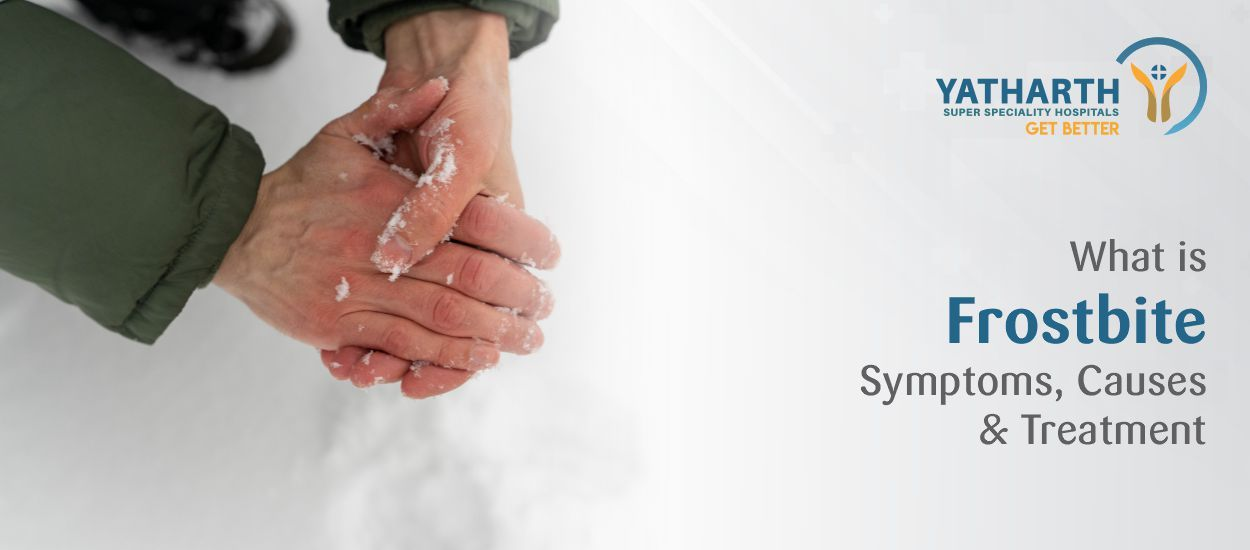


Exposure to extreme cold can do more than make the skin feel numb or uncomfortable. In some cases, it can cause frostbite, an injury that occurs when the skin and underlying tissues freeze. The condition may begin with pale skin, tingling or loss of sensation and can progress to more serious tissue damage. Knowing how frostbite develops, which symptoms to watch for and when to seek medical attention can help reduce the risk of complications. In this blog, we’ll cover the meaning, symptoms, causes and treatment.
What is Frostbite?
Frostbite is a cold-related injury that occurs when the skin and underlying tissues freeze. It most commonly affects the fingers, toes, ears, nose and cheeks because these areas are more exposed to cold and may receive less blood flow in freezing conditions.
When temperatures drop, the body narrows blood vessels near the skin to preserve heat around vital organs. Prolonged exposure to extreme cold can freeze tissues and damage cells, blood vessels and surrounding structures.
Frostbite can affect only the skin's surface or extend into deeper tissues, including muscles and nerves. Early treatment can help limit damage, while severe cases may cause permanent tissue loss.
Stages of Frostbite
Frostbite progresses through different stages depending on the severity of the injury and the depth of tissue damage. The stages range from mild skin damage to severe injury affecting deeper tissues.
Frostnip
Frostnip is a mild cold injury that affects the skin's surface without causing permanent tissue damage. The skin may become pale, cold or numb, with tingling or discomfort during rewarming. It usually improves with gentle warming.
Superficial Frostbite
Superficial frostbite affects the skin and the tissues just beneath it. The affected area may appear pale or waxy and feel firm. Swelling and blisters may develop after rewarming. Prompt treatment can help limit tissue damage.
Deep Frostbite
Deep frostbite extends into deeper tissues and can damage muscles, nerves, blood vessels and other structures. The skin may become hard and discoloured, and blood-filled blisters may appear after thawing. Severe cases can lead to tissue death and may require surgery.
Symptoms of Frostbite
Symptoms of frostbite vary depending on the severity of the injury. The following are common signs, from early symptoms to those associated with deep frostbite:
Early Symptoms
The affected skin may feel unusually cold, followed by tingling, stinging, pain or numbness. It may also appear pale or red and feel firm to the touch. As sensation decreases, individuals may not realise how serious the injury has become.
Symptoms of Superficial Frostbite
As frostbite progresses, the skin may become white, greyish-yellow or bluish and develop a firm or waxy texture. Swelling and pain may occur during rewarming. Clear or milky blisters can develop after the skin thaws.
Symptoms of Deep Frostbite
Severe frostbite affects deeper tissues and may cause:
- Hard, frozen skin that feels numb.
- Significant swelling and blood-filled blisters.
- Loss of sensation in the affected area.
- Blue, dark purple or black skin changes.
- Difficulty moving the affected fingers or toes.
Dark or blackened skin can indicate tissue death. Hard, frozen skin, persistent numbness, blisters or changes in skin colour after cold exposure require urgent medical assessment.
Causes and Risk Factors of Frostbite
Frostbite occurs when prolonged exposure to freezing temperatures causes body tissues to freeze. Wind, moisture and inadequate clothing can accelerate heat loss.
Common risk factors include:
- Prolonged exposure to extreme cold: Spending extended periods outdoors in freezing weather increases the risk.
- Wind chill: Strong winds remove heat from exposed skin more quickly.
- Wet clothing or footwear: Damp clothes and wet socks increase heat loss.
- Inadequate protection: Thin gloves, unsuitable footwear and uncovered ears or faces leave skin vulnerable.
- High-altitude exposure: Mountaineering, trekking and other activities in cold, high-altitude environments can increase the risk.
- Reduced circulation: Conditions that affect blood flow can make the extremities more vulnerable to cold injury.
- Alcohol and substance use: These can impair judgement and awareness of cold exposure, delaying protective action.
Older adults, young children and people who cannot recognise or communicate early symptoms may also face greater risks in extreme cold.
How is Frostbite Diagnosed?
Accurate diagnosis helps doctors assess tissue damage and identify complications. An internal medicine specialist or emergency care doctor may begin the evaluation by:
- Reviewing cold exposure: The doctor asks how long the person was exposed to cold, whether the skin became wet and when symptoms started.
- Examining the affected area: The assessment checks skin colour, temperature, sensation, swelling, blisters and movement.
- Assessing circulation: The doctor evaluates blood flow to determine whether the injury may have affected deeper tissues.
- Checking for hypothermia: If the person has intense shivering, confusion, drowsiness or other signs of dangerously low body temperature, the doctor assesses and treats this emergency.
- Ordering imaging when necessary: Severe frostbite may require imaging or other investigations to assess deeper tissue damage.
The full extent of frostbite may not become clear immediately. Doctors may reassess the affected area after rewarming and during follow-up to determine how the tissues are responding.
Frostbite Treatment
Frostbite requires prompt attention. Immediate priorities are to prevent further cold exposure, protect the affected tissues, and seek medical care when needed. A person should:
Move to a Warm, Sheltered Place
Move indoors or to a sheltered area as soon as possible. Remove wet clothing and replace it with dry layers. Wrap the person in a warm blanket to prevent further heat loss.
If the person shows signs of hypothermia, such as confusion, marked drowsiness or slurred speech, seek emergency medical help immediately.
Remove Tight Items
Remove rings, watches and other tight items before swelling develops. If footwear or clothing is constricting the affected area, loosen or remove it carefully without pulling on injured skin.
Rewarm the Affected Area Safely
If there is no risk of the area freezing again, gently rewarm the affected part in warm, not hot, water. Medical guidance commonly recommends water at approximately 37–39°C for around 30 minutes, or until the tissue softens and sensation begins to return.
Do not attempt to thaw the area if it may be exposed to freezing temperatures again before medical care is available. Refreezing can cause further tissue damage.
Protect the Skin
After rewarming, cover the affected area loosely with a clean, dry dressing. Avoid pressure on the injured tissue and elevate the affected limb if possible to help reduce swelling.
Do not deliberately burst blisters or remove damaged skin at home. A healthcare professional should assess the injury and decide whether wound treatment is necessary.
Seek Medical Treatment
All suspected frostbite beyond mild frostnip requires medical assessment. Treatment depends on the severity and may include:
- Controlled rewarming and pain relief.
- Wound care and dressings.
- Medicines for selected severe injuries to improve blood flow or reduce complications.
- Treatment for infection when indicated.
- Surgery to remove dead tissue in severe cases.
Severe frostbite may require specialist care and hospital admission. Early medical evaluation helps doctors assess the injury and determine which treatments are appropriate.
What Not to Do When You Have Frostbite
Incorrect warming methods and handling can cause further tissue damage. Avoid the following actions:
- Rubbing or massaging the affected area: Friction can damage already injured tissues.
- Applying direct heat: Fires, radiators, heating pads, hot-water bottles and hairdryers can burn numb skin.
- Using hot water: High temperatures can injure the skin without the person realising it.
- Bursting blisters: This can increase the risk of infection and tissue damage.
- Walking on frostbitten feet: Pressure and movement can cause further tissue damage.
- Thawing the affected area when refreezing is likely: Repeated freezing and thawing can cause severe tissue damage.
- Delaying medical care for severe symptoms: Home warming cannot replace medical assessment and treatment for significant frostbite.
When to Seek Medical Care for Frostbite
Seek urgent medical care if cold exposure causes any of the following:
- Hard, frozen or waxy-looking skin.
- Persistent numbness or loss of sensation.
- Swelling or blisters, particularly blood-filled blisters.
- White, blue, grey or black skin changes.
- Severe pain during or after rewarming.
- Difficulty moving the affected fingers or toes.
Call emergency services immediately if the person also develops signs of hypothermia, including confusion, slurred speech, severe drowsiness, difficulty walking or intense, persistent shivering. Hypothermia can be life-threatening and requires emergency treatment.
Do not wait for the skin to change colour or for pain to become severe before seeking help. Frostbite can cause significant damage even when the affected area initially appears relatively normal.
Internal Medicine Care at Yatharth Super Speciality Hospitals
Frostbite requires prompt medical assessment to determine the depth of tissue injury and identify complications such as hypothermia. At Yatharth Super Speciality Hospitals, the Centre of Internal Medicine provides medical evaluation and treatment for a wide range of adult health conditions, including frostbite. Our general physicians assess patients’ symptoms, evaluate their clinical needs and determine the appropriate investigations and treatment plan. The hospital also provides emergency and critical care services for patients who require urgent or intensive medical attention.
People with suspected frostbite should consult a doctor promptly for evaluation and appropriate treatment. If the affected area shows signs of severe frostbite, seek immediate emergency medical care to reduce the risk of further tissue damage and complications.