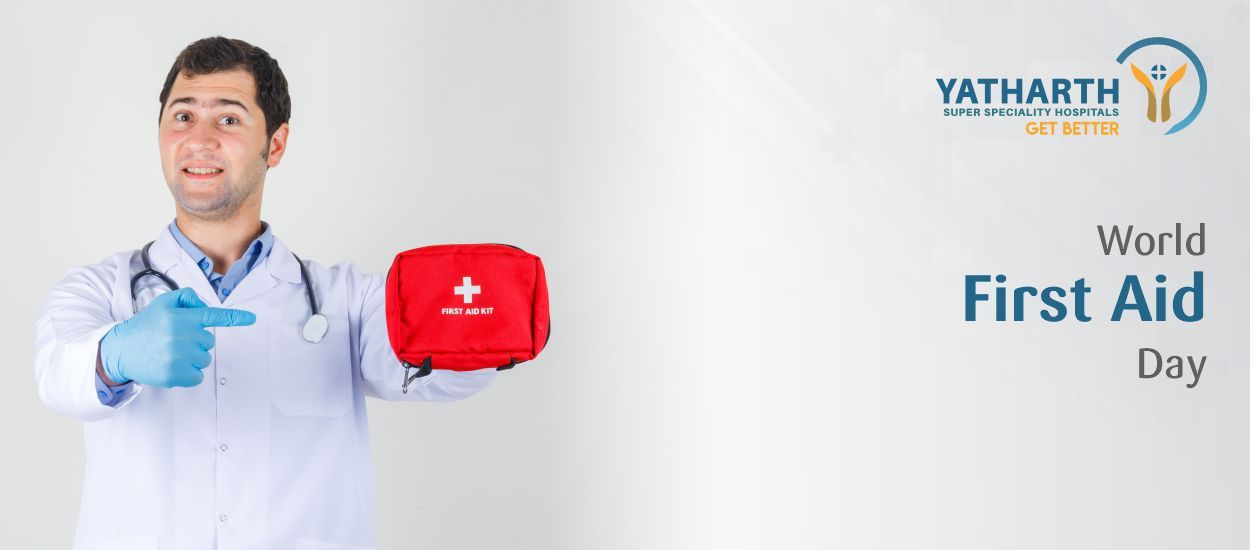


World First Aid Day 2026 falls on 12 September 2026 the second Saturday of September. World First Aid Day brings attention to the significance of knowing what to do during the critical minutes before professional medical help arrives.
Accidents, heart emergencies, burns, choking and heavy bleeding all can take place anywhere your own home, workplace, while traveling, or simply walking down the street. Knowing some basic first aid allows a person to act with more confidence and goes a long way toward a safe response, helps to prevent complications, in some instances, save a life.
Treatment by a qualified medical practitioner is essential and first aid is not a substitute for this. Its purpose is to provide immediate, appropriate care based on the person's condition and the responder's level of training.
World First Aid Day History
The World First Aid Day history is closely connected with the international Red Cross and Red Crescent movement and its long-standing efforts to make first aid knowledge accessible to communities. The IFRC observes the second Saturday of September as World First Aid Day, and several National Red Cross and Red Crescent Societies are involved in various awareness and training initiatives worldwide.
Significance of World First Aid Day
The importance of World First Aid Day is that it encourages people to become active during an emergency rather than being a passive victim and just waiting for an ambulance.
The first few minutes of some emergencies can be especially vital. For instance, if someone is unresponsive and not breathing normally, performing CPR and using an AED as soon as possible can improve the odds of survival.
First aid is not just about having a first-aid kit in your house. It’s about being able to identify an emergency, call for professional help and deliver suitable immediate assistance.
First Aid Basics Everyone Should Know
One useful approach to first aid basics is Check, Call, Care:
Check: Before you go up to the person, ensure the environment is safe. Check for response, breathing, and severe bleeding.
Call: Call local emergency for a potentially serious or life-threatening condition and bring emergency equipment (such as an AED) if available.
Care: Provide appropriate first aid according to the person's condition and your level of training.
Do not put yourself at risk while assisting others.
CPR Awareness: What to Do During Cardiac Arrest
Awareness of CPR is a crucial part of emergency preparedness. If an adult is unresponsive and not breathing normally, or only gasping, activate the emergency medical system and begin CPR. As soon as an AED is available, use it.
For people without formal CPR training, hands-only CPR is the most effective way to respond in the moment until professional assistance arrives. Formal first aid and CPR training is recommended to learn correct technique.
First Aid Tips for Common Emergencies
Severe Bleeding
Severe external bleeding can be life-threatening. Place a pad or dressing over the wound and press down firmly with your hand. For life-threatening bleeding from an arm or leg, a tourniquet may be used by someone trained to do so.
First Aid Tips for Common Emergencies. Maintain proper pressure and follow emergency medical guidance.
Burns
In the case of a minor burn, gently rinse the burned area with clean, cool running water as soon as possible. Never put butter, grease, or any other household substance on a burn.
Prompt medical attention is needed for large or deep burns, electrical or chemical burns, or burns to the face, hands, feet, major joints, genitals or a large portion of the body.
Choking
An individual whose airways are blocked, can’t speak, or is having trouble breathing is suffering from severe choking. A responsive adult or child can be treated with proper back blows and abdominal thrusts. If the individual loses consciousness, emergency services should be called, and CPR should be initiated as per the training. Do not perform a blind finger sweep inside the mouth.
Unconscious but Breathing
If a person is unconscious but breathing normally, place them in the recovery position when appropriate and continue monitoring them until medical help arrives. If a head, neck, or spinal injury is suspected, do not move the person unnecessarily unless they must be moved for safety, CPR, or to control bleeding.
When Should You Seek Emergency Medical Help?
First aid should never delay professional treatment when an emergency is suspected-
- Unresponsiveness or abnormal breathing
- Chest pain or significant shortness of breath
- Stroke symptoms (including sudden weakness in one side of the face, arm, or trouble speaking)
- Severe burns
- Severe allergic reactions
- Major trauma, or suspected spinal injury
- Severe choking
- Seizures that are prolonged or occur repeatedly
When in doubt, it is safer to seek professional medical assistance.
Building Lifesaving Skills at Home and Work
Learning lifesaving skills should not be reserved for health care providers. Parents, teachers, office workers, students, caregivers, and community members can all take a first aid and CPR class.
Have a first aid kit stocked and accessible, and make sure everyone in the family, or at your workplace, knows where it is. Get trained in CPR, AED, bleeding control, and choking response through an accredited training course and do not just depend on online information.
Conclusion
World First Aid Awareness Day is a reminder that emergencies do not always happen in hospitals. They can happen in everyday situations, and the person closest to an emergency is often the first potential responder.
Take the opportunity on this World First Aid Day 2026 to get practical first aid training, update your CPR skills, and motivate others in your community to get trained. It’s a few minutes of preparation that could make a world of difference when every second counts.