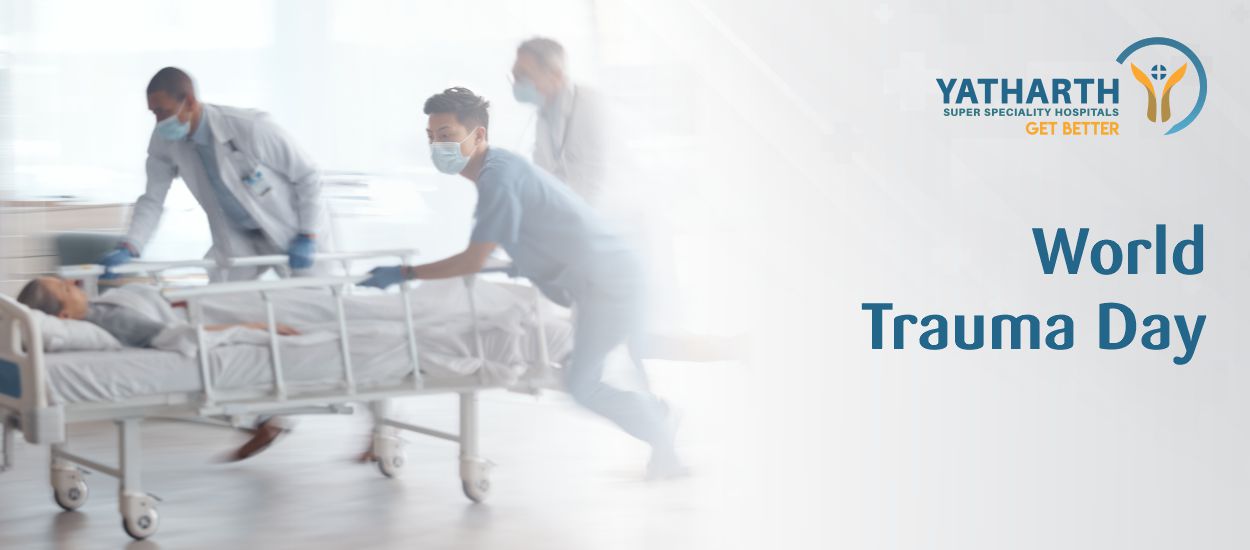


World Trauma Day 2026 is observed on 17 October, providing an opportunity to raise awareness about traumatic injuries, their prevention, the importance of rapid emergency care and the long-term physical and psychological consequences of trauma.
Trauma can happen suddenly and without warning. A road traffic crash, fall, workplace accident, sports injury, burn, violence or natural disaster can cause injuries ranging from minor wounds to life-threatening damage involving the brain, spine, chest, abdomen or major blood vessels.
For trauma patients, time matters. Rapid recognition of serious injuries, appropriate first aid, timely transportation and coordinated emergency and surgical care can make an important difference in outcomes.
Important note: Unlike some WHO/UN-designated health observances, there is not a universally published official “World Trauma Day 2026” theme from WHO or the United Nations that I could verify. Therefore, this article focuses on the core purpose generally associated with Trauma Day: trauma awareness, injury prevention, emergency response and timely treatment.
What Is World Trauma Day?
World Trauma Day is observed annually on 17 October to create awareness about traumatic injuries and the need for effective emergency response and trauma care.
The day draws attention to the burden of injuries caused by:
Road traffic accidents
- Falls
- Workplace accidents
- Sports injuries
- Burns
- Violence
- Natural disasters
- Other accidental or intentional trauma
Trauma is not only an emergency-room issue. A serious injury can affect a person's mobility, independence, mental health, ability to work and quality of life for months or even years.
Why is Trauma Awareness Important?
Trauma can affect anyone, regardless of age or background.
A seemingly ordinary journey, workplace activity or sporting event can result in a serious injury within seconds.
The outcome after trauma can depend on several factors:
Time of injury → First response → Transportation → Emergency assessment → Definitive treatment → Rehabilitation
The earlier a serious injury is recognized and appropriate care begins, the better the opportunity to prevent avoidable complications.
What is Trauma?
In medical terms, trauma refers to physical injury caused by an external force.
Depending on the mechanism and severity, trauma may affect one or multiple parts of the body.
Examples include:
Head Injury
Trauma to the head can cause anything from a minor scalp injury to a serious traumatic brain injury.
Spinal Injury
Damage to the spine or spinal cord can potentially result in weakness, loss of sensation or paralysis.
Chest Trauma
Injuries to the chest may affect the ribs, lungs, heart or major blood vessels.
Abdominal Trauma
Blunt or penetrating trauma can damage organs such as the liver, spleen, kidneys or intestines.
Limb Injuries
Fractures, dislocations, crush injuries and severe soft-tissue injuries can affect the arms and legs.
Multiple Trauma
A patient with serious injuries involving several body regions is often described as having polytrauma or multiple trauma.
These patients require rapid, coordinated assessment because several injuries may be present simultaneously.
Common Causes of Trauma
Road Traffic Accidents
Road traffic crashes are an important cause of traumatic injuries worldwide.
They can result in:
- Head injuries
- Spinal injuries
- Chest injuries
- Abdominal injuries
- Pelvic fractures
- Limb fractures
- Internal bleeding
How Can Road Trauma Be Reduced?
Simple safety measures can significantly reduce risk:
- Wear a seat belt.
- Wear an appropriate helmet on two-wheelers.
- Avoid driving under the influence of alcohol or drugs.
- Follow speed limits.
- Avoid distracted driving.
- Do not use mobile phones while driving.
- Follow traffic signals.
- Use child restraints appropriate for age and size.
Falls
Falls are another common cause of injury.
They can occur at:
- Home
- Workplaces
- Construction sites
- Schools
- Hospitals
- Public spaces
Older adults may be particularly vulnerable to serious complications from falls because of factors such as reduced balance, osteoporosis, visual impairment or multiple medications.
Fall Prevention at Home
Consider:
- Keeping floors free of clutter
- Improving lighting
- Installing handrails where appropriate
- Using non-slip surfaces
- Keeping frequently used objects within easy reach
- Addressing vision problems
- Discussing recurrent falls with a healthcare professional
Workplace Injuries
Workplace trauma can occur in construction, manufacturing, healthcare, transportation, agriculture and many other sectors.
Potential injuries include:
- Falls from height
- Machinery injuries
- Crush injuries
- Burns
- Electrical injuries
- Chemical exposure
- Cuts and lacerations
- Fractures
Appropriate protective equipment, workplace training, safety protocols and hazard identification are important components of injury prevention.
Sports Injuries
Sports and physical activity are beneficial for health, but injuries can occur.
Common sports injuries include:
- Sprains
- Muscle strains
- Fractures
- Dislocations
- Ligament injuries
- Concussions
- Tendon injuries
Proper warm-up, appropriate protective equipment, correct technique and gradual progression of activity can help reduce injury risk.
Burns
Burn injuries may result from:
- Fire
- Hot liquids
- Steam
- Electricity
- Chemicals
- Hot surfaces
The severity of a burn depends on factors such as its depth, size, location and cause.
Severe burns can require specialized medical treatment and sometimes surgery and prolonged rehabilitation.
Understanding Traumatic Brain Injury
A traumatic brain injury (TBI) occurs when an external force causes injury to the brain.
Symptoms can vary widely.
Possible symptoms include:
- Headache
- Dizziness
- Confusion
- Memory problems
- Nausea or vomiting
- Loss of consciousness
- Difficulty speaking
- Weakness
- Changes in behaviour
- Seizures
A person does not necessarily need to lose consciousness to have a significant brain injury.
Warning Signs After a Head Injury
After a significant head injury, urgent medical assessment is particularly important if the person develops symptoms such as:
- Repeated vomiting
- Increasing or severe headache
- Increasing drowsiness or difficulty waking
- Confusion
- Seizure
- Weakness or numbness
- Difficulty speaking
- Problems with vision
- Loss of consciousness
- Unequal pupils
- Fluid or blood coming from the nose or ears
These symptoms can indicate a serious injury and should not be ignored.
What is Spinal Trauma?
Spinal trauma occurs when an injury damages the vertebrae, ligaments, spinal cord or surrounding structures.
Possible causes include:
- Road traffic crashes
- Falls
- Sports injuries
- Workplace accidents
- Violence
A spinal cord injury can result in temporary or permanent changes in:
- Movement
- Sensation
- Bladder and bowel function
- Sexual function
- Autonomic functions
Important First-Aid Principle
If a spinal injury is suspected after a significant accident, avoid unnecessarily moving the injured person unless there is an immediate danger that requires movement.
Emergency medical services should be contacted as soon as possible.
What is Internal Bleeding?
One of the most dangerous aspects of major trauma is that serious bleeding may occur inside the body without visible external bleeding.
Possible warning signs can include:
- Pale or clammy skin
- Rapid pulse
- Rapid breathing
- Dizziness
- Weakness
- Confusion
- Fainting
- Increasing abdominal swelling or pain
Internal bleeding can become life-threatening very quickly.
A person with suspected major trauma should receive emergency medical evaluation even if there is little or no visible bleeding.
What Should You Do in a Trauma Emergency?
A simple approach is:
Ensure Your Own Safety
Before helping, make sure the accident scene is reasonably safe.
Do not put yourself in danger.
Call Emergency Services
Contact the local emergency medical service and provide:
- Location
- Number of injured people
- Type of accident
- Visible injuries
- Whether anyone is unconscious
- Any other important information
Check Responsiveness and Breathing
If the person is unresponsive and not breathing normally, emergency CPR/AED procedures may be required.
Control Severe External Bleeding
Apply firm, direct pressure to significant external bleeding using available clean material or appropriate first-aid equipment.
For life-threatening limb bleeding, a properly used tourniquet may be appropriate when available and when the responder is trained to use one.
Avoid Unnecessary Movement
Unless there is immediate danger, avoid moving someone with suspected head, neck or spinal trauma unnecessarily.
Keep the Person Warm
Prevent unnecessary exposure to cold while waiting for emergency help.
Why Is the "Golden Hour" Important in Trauma?
You may have heard the term "golden hour" used in trauma care.
It is commonly used to emphasize the importance of early treatment after severe injury.
However, trauma care is not governed by a simple rule that every patient must receive definitive treatment within exactly 60 minutes.
The key principle is:
Serious injuries require rapid recognition, stabilization, and access to appropriate definitive care.
For some injuries, minutes can be critical.
What Happens When a Trauma Patient Reaches the Emergency Department?
Trauma teams typically work systematically to identify and treat life-threatening problems.
The initial assessment commonly prioritizes:
Airway
Is the airway open and protected?
Breathing
Is the patient breathing effectively? Are there injuries affecting the lungs or chest?
Circulation
Is there severe bleeding or shock? Is blood circulation adequate?
Disability
Is there evidence of neurological injury or altered consciousness?
Exposure
The patient may need to be examined more completely to identify injuries that were not initially visible, while maintaining appropriate protection from heat loss.
This systematic approach helps the medical team identify the most immediately life-threatening problems first.
What Is a Trauma Centre?
A trauma centre is a hospital equipped and organized to provide specialized care for seriously injured patients.
Depending on the healthcare system and hospital, trauma services may involve:
- Emergency medicine
- Trauma surgery
- Orthopaedics
- Neurosurgery
- Anaesthesiology
- Critical care
- Radiology
- Interventional radiology
- Blood bank services
- Rehabilitation
- Nursing and allied healthcare professionals
Major trauma often requires a multidisciplinary team, rather than a single specialist.
The Role of Imaging in Trauma
Depending on the patient's condition, doctors may use:
- X-rays
- Ultrasound
- CT scans
- MRI in selected situations
- Other specialized imaging
Imaging helps identify fractures, internal bleeding, organ injuries, brain injuries and other problems.
However, unstable patients may require immediate life-saving treatment before extensive imaging.
When Does Trauma Require Surgery?
Not every traumatic injury requires surgery.
However, emergency surgery may be necessary in situations such as:
- Severe internal bleeding
- Certain abdominal injuries
- Major vascular injuries
- Severe fractures
- Compartment syndrome
- Certain brain injuries
- Serious chest injuries
- Limb-threatening injuries
The decision depends on the patient's condition, injury pattern, imaging findings and response to initial treatment.
Trauma Care Doesn't End After Surgery
Surviving the initial injury is only the beginning.
Some trauma patients require:
- Intensive care
- Multiple surgeries
- Wound management
- Physiotherapy
- Occupational therapy
- Speech or cognitive rehabilitation
- Pain management
- Psychological support
- Long-term follow-up
Recovery can take weeks, months or sometimes years depending on the severity and type of injury.
The Psychological Impact of Trauma
Physical injuries are not the only consequences of a traumatic event.
People who experience serious accidents or other potentially traumatic events may experience:
- Fear
- Anxiety
- Sleep difficulties
- Intrusive memories
- Emotional distress
- Depression
- Post-traumatic stress symptoms
WHO reports that most people exposed to potentially traumatic events do not develop PTSD, but some people can develop persistent mental health conditions following traumatic experiences. Social support can help reduce the risk of developing PTSD. World Health Organization
Psychological recovery should therefore be considered an important part of trauma rehabilitation.
Trauma Prevention: Small Actions Can Save Lives
Trauma care is important, but preventing injuries before they happen is even better.
On the Road
- Wear a helmet
- Wear a seat belt.
- Follow speed limits.
- Never drive under the influence.
- Avoid distracted driving.
- Follow traffic rules.
At Home
- Keep floors clear.
- Improve lighting.
- Store hazardous materials safely.
- Keep medicines and chemicals away from children.
- Install appropriate safety measures around stairs.
At Work
- Follow safety protocols.
- Use protective equipment.
- Report hazards.
- Follow machinery safety procedures.
- Receive appropriate training.
During Sports
- Use appropriate protective equipment.
- Learn correct techniques.
- Warm up appropriately.
- Don't return to play too quickly after an injury.
Myths and Facts About Trauma
Myth 1: "If there is no visible bleeding, the injury isn't serious."
Fact: Serious internal injuries can occur without obvious external bleeding.
Myth 2: "If someone can walk after an accident, they are fine."
Fact: Some serious injuries may initially have relatively mild symptoms.
Myth 3: "A person with a suspected spinal injury should immediately be moved."
Fact: Unnecessary movement can potentially worsen an unstable spinal injury. Move only when necessary for immediate safety or as directed by trained responders.
Myth 4: "Every head injury causes loss of consciousness."
Fact: A person can have a traumatic brain injury without losing consciousness.
Myth 5: "Trauma recovery ends when the fracture heals."
Fact: Recovery may also involve rehabilitation, pain management, psychological care and regaining functional independence.