

|
Overview
|
India has always been known for its ruthless summers, but this year, things are becoming increasingly intense, with heatwaves arriving earlier, lasting longer, and affecting larger parts of the country. Recent climate discussions highlight how 2026 is shaping up to be particularly harsh, driven by a mix of rising global temperatures, changing weather patterns such as El Nino, and below-normal rainfall expectations. In such conditions, common summer skin problems such as heat rash or prickly heat are becoming more frequent and harder to avoid, especially for those exposed to outdoor heat or living in densely populated urban areas.
To help you keep yourself protected this summer, this article explores all you need to know about heat rash, including its causes, symptoms, home remedies and prevention. Let’s start with understanding the problem.
What is a Heat Rash?
Heat rash, also known as prickly heat or miliaria, is a common skin condition that occurs when sweat gets trapped under the skin. This usually happens when sweat ducts become blocked due to hot and humid weather, leading to inflammation and irritation.
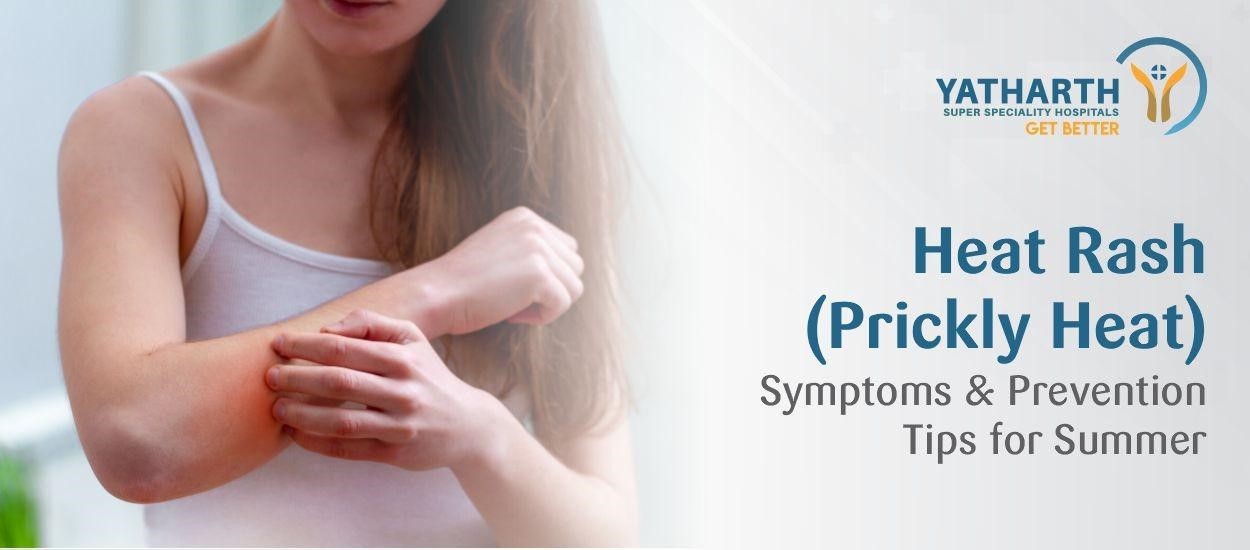
It typically appears as small red bumps, tiny blisters, or itchy patches on the skin and is often accompanied by a prickling or stinging sensation. Heat rash is most common in areas where sweat accumulates, such as the neck, back, chest, underarms, and groin.
While it is not a serious medical condition, it can cause significant discomfort, especially during hot summers or periods of excessive sweating.
What are the Causes of Heat Rash?
Heat rash develops when sweat glands become blocked, trapping sweat beneath the skin. This leads to irritation, inflammation, and the characteristic itching or prickling sensation. The main causes include:
- Hot and humid weather: High temperatures and humidity increase sweating, making it easier for sweat ducts to get blocked.
- Excessive sweating: Physical activity, outdoor work, or heat exposure can cause heavy sweating that overwhelms the sweat glands.
- Tight or non-breathable clothing: Synthetic fabrics or fitted clothes trap heat and moisture against the skin, preventing sweat from evaporating.
- Prolonged bed rest or immobility: People confined to bed or sitting in one position for long periods may develop heat rash due to continuous pressure and trapped sweat.
- Overheating in infants and young children: Babies are especially prone because their sweat glands are still developing and can easily get blocked.
- Hot environments without proper ventilation: Poor airflow, whether indoors or outdoors, increases body heat and sweating, raising the risk of heat rash.
In most cases, heat rash is triggered by a combination of these factors rather than a single cause.
What are Symptoms of Heat Rash?
Heat rash symptoms are usually easy to recognize and tend to appear in areas where sweat gets trapped. Common signs include:
- Small red bumps or blisters: Tiny raised spots that may look like a rash or clustered pimples.
- Itching or prickling sensation: A key symptom that often worsens with heat or sweating, giving a “prickly” feeling under the skin.
- Redness of the skin: Affected areas may appear flushed or inflamed.
- Mild swelling or irritation: The skin may feel slightly swollen, tender, or uncomfortable to touch.
- Heat-sensitive discomfort: Symptoms often intensify in hot or humid conditions and improve in cooler environments.
Common Affected Areas
Neck, chest, back, underarms, groin, and skin folds are most commonly affected due to sweat accumulation.
In most cases, heat rash is mild and temporary, but it can become more irritating if sweating continues or the skin remains exposed to heat.
Home Remedies for Relief from Heat Rash
Heat rash usually resolves on its own once the skin is cooled and sweating is controlled. However, the discomfort, itching, redness, and prickling, can be quite irritating. These home remedies help soothe the skin and speed up recovery:
- Stay in a cool environment: The most important step is to reduce heat exposure. Stay indoors during peak afternoon heat, use fans or air conditioning, and avoid crowded or poorly ventilated spaces. Cooling the body helps stop further blockage of sweat ducts.
- Cold compress therapy: Apply a soft cloth soaked in cold water to the affected area for 10–15 minutes at a time. This reduces inflammation, calms itching, and provides immediate relief from the burning sensation.
- Lukewarm oatmeal baths: Colloidal oatmeal is highly effective for irritated skin. Add it to a lukewarm bath and soak for 15–20 minutes. It forms a protective layer over the skin, reduces itching, and helps restore skin comfort.
- Aloe vera application: Fresh aloe vera gel acts as a natural coolant. It has anti-inflammatory and healing properties that reduce redness and soothe the prickling sensation. Apply a thin layer 2–3 times a day.
- Calamine or sandalwood-based lotions: Calamine lotion helps dry out the rash and reduce itching. Sandalwood paste, traditionally used in Indian households, also has cooling and antimicrobial benefits.
- Keep skin clean and dry: Take regular baths using mild, fragrance-free soaps. After sweating, gently rinse or wipe the skin and pat dry instead of rubbing. This prevents further clogging of sweat glands.
- Wear breathable fabrics: Choose loose cotton clothing that allows air circulation. Avoid synthetic fabrics like polyester, which trap heat and moisture against the skin.
- Powder use (light application): Talc-free, medicated prickly heat powders can help absorb excess sweat and reduce friction in affected areas like underarms, neck, and back.
- Hydration and cooling foods: Drink plenty of water, coconut water, and buttermilk to regulate body temperature. Cooling foods like cucumber, watermelon, and curd can also help reduce internal heat.
- Avoid scratching: Scratching can worsen irritation and may lead to infection. Keeping nails trimmed and using soothing agents helps control the urge to scratch.
With consistent cooling, proper hygiene, and reduced sweating, heat rash typically improves within a few days.
When to Consult a Doctor for Heat Rash?
Most cases of heat rash (prickly heat) resolve on their own with cooling and basic care. However, when symptoms are persistent, severe, or show signs of infection, medical treatment may be required to relieve discomfort and prevent complications. Here are the scenarios in which it is important to consult a doctor:
- Rash does not improve after several days of home care
- Itching becomes severe or persistent
- Signs of infection such as pus, fever, or worsening redness appear
- Heat rash keeps recurring frequently
Medical Treatment for Heat Rash
If the rash does not get better even after home remedies and appropriate lifestyle changes, doctors may recommend one or more of the following:
- Topical corticosteroid creams: Mild steroid creams such as hydrocortisone may be prescribed to reduce inflammation, redness, and itching. These are typically used for short periods and only on the affected areas.
- Soothing medicated lotions: Calamine-based or anti-itch lotions can help dry out the rash and provide relief from irritation and burning sensations.
- Oral antihistamines: If itching is intense or disrupts sleep, antihistamines may be recommended to control the urge to scratch and improve comfort.
- Barrier creams and protective treatments: Doctors may suggest creams or powders that help reduce friction and prevent further sweat blockage, especially in recurrent cases.
- Antibiotics (if infection is present): In cases where the rash becomes infected, shown by pus, increased pain, swelling, or warmth, topical or oral antibiotics may be necessary.
- Treatment of underlying causes: If excessive sweating, skin sensitivity, or other medical conditions are contributing to repeated episodes, addressing these triggers is an important part of treatment.
In most cases, medical treatment is straightforward and mainly focused on reducing symptoms and preventing the rash from worsening.
Tips to Prevent Heat Rash
Heat rash is triggered when sweat gets trapped in the skin due to heat, humidity, and blocked sweat glands. Prevention is mainly about reducing excessive sweating and improving skin ventilation during hot weather.
- Prioritise heat avoidance during peak hours: Try to stay indoors between late morning and late afternoon when temperatures are highest. If going out is unavoidable, seek shade frequently and limit prolonged sun exposure.
- Choose the right clothing strategy: Wear loose-fitting, light-coloured cotton or linen clothing that allows air circulation. Tight outfits and synthetic fabrics like polyester or nylon trap heat and moisture, increasing the risk of blocked sweat ducts.
- Maintain regular bathing habits: Take at least one to two showers daily in hot weather, especially after sweating. Use mild, fragrance-free soaps that clean the skin without stripping its natural barrier.
- Prevent sweat buildup on the skin: After any physical activity or outdoor exposure, change out of damp clothes quickly. Letting sweat sit on the skin for long periods significantly increases irritation risk.
- Focus on proper drying techniques: After bathing or sweating, gently pat the skin dry instead of rubbing. Pay special attention to sweat-prone areas such as the neck, back, chest, and skin folds.
- Use skincare products carefully: Avoid heavy creams, petroleum-based ointments, and greasy sunscreens in hot weather unless necessary. These can block pores and worsen sweat retention.
- Opt for breathable sleeping environments: Use light cotton bedsheets and ensure good ventilation in the bedroom. Overheating at night can also trigger heat rash in sensitive individuals.
- Stay consistently hydrated: Drink enough water throughout the day to help regulate internal body temperature. Hydration supports natural cooling and reduces the intensity of sweating.
- Be mindful of physical activity: Avoid intense workouts or outdoor labour during peak heat. If exercise is necessary, choose early mornings or evenings when temperatures are lower.
- Manage humidity exposure: In humid climates, use fans or dehumidifiers when possible. High humidity slows sweat evaporation, making skin more prone to irritation.
- Protect vulnerable areas in advance: If you are prone to heat rash, lightly dusting prickly heat powder on common areas like underarms, neck, and inner thighs can help reduce friction and moisture buildup.
Consistent prevention habits are especially important in increasingly harsh summer conditions, where higher temperatures and humidity make heat rash more common and persistent.
Final Words
Heat rash may be a common summer skin concern, but it is also one of the most manageable. With rising temperatures and increasingly harsh heatwaves, taking small but consistent precautions becomes even more important to protect your skin from discomfort and irritation. The good news is, most cases of prickly heat can be prevented, and even treated effectively, by simply keeping the body cool, maintaining good hygiene, and allowing the skin to breathe. If the problem persists, consult a doctor to ensure that symptoms do not escalate or lead to infection. As summers grow more intense, being mindful of how your body responds to heat can make a big difference.