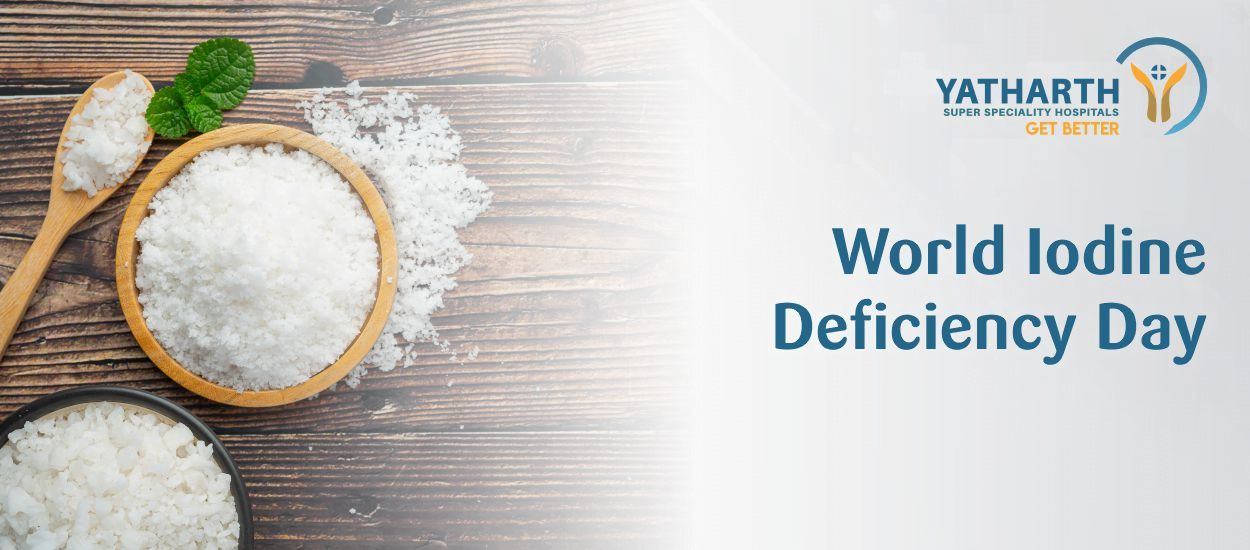


World Iodine Deficiency Day, also known as World Iodine Deficiency Prevention Day, is observed annually on 21 October to raise awareness about the importance of iodine nutrition and the health problems associated with iodine deficiency. The Iodine Global Network (IGN) notes that, while the day is not an officially recognized WHO global health day, it has become an internationally used awareness event.
Iodine is a trace mineral required by the body in small amounts, but its importance is enormous. It is essential for producing thyroid hormones, which regulate metabolism and play important roles in brain development, growth and many other body functions.
Iodine deficiency is particularly important during pregnancy and early childhood, when adequate thyroid hormone production is essential for normal brain and nervous-system development. WHO identifies iodine deficiency as one of the world's important micronutrient deficiencies, particularly affecting children and pregnant women.
What Is World Iodine Deficiency Day?
World Iodine Deficiency Day is observed on 21 October to increase awareness about:
- Iodine deficiency
- Iodine nutrition
- Thyroid health
- Brain development
- Pregnancy and child health
- Iodized salt
- Prevention of iodine deficiency disorders
The day also emphasizes the importance of maintaining successful public-health strategies that have reduced iodine deficiency in many parts of the world.
The Iodine Global Network describes universal salt iodization as a proven, affordable and sustainable strategy for preventing iodine deficiency disorders.
When Is World Iodine Deficiency Day 2026?
Date: 21 October 2026
Day: Wednesday
Also known as: World Iodine Deficiency Prevention Day
There is no universally published official global theme for World Iodine Deficiency Day 2026 that I could verify from WHO or the Iodine Global Network. Therefore, the focus of this article is on the central public-health message: adequate iodine nutrition, prevention of iodine deficiency and protection of thyroid and brain health.
It is also important to clarify that this is an awareness observance rather than one of the 13 official global public-health days on which WHO places particular institutional focus.
What Is Iodine?
Iodine is an essential trace mineral needed to produce thyroid hormones.
The thyroid gland uses iodine to make hormones that help regulate:
- Metabolism
- Energy production
- Body temperature
- Growth
- Brain development
- Nervous-system function
- Normal development in children
Although the body requires only a small amount of iodine, insufficient intake over time can affect thyroid hormone production and lead to health problems.
What Is Iodine Deficiency?
Iodine deficiency occurs when the body does not receive enough iodine to meet its needs.
When iodine intake is insufficient, the thyroid may not be able to produce enough thyroid hormones.
The body may respond by increasing stimulation of the thyroid gland. Over time, this can lead to enlargement of the thyroid, known as a goitre.
Iodine deficiency can also have important consequences during pregnancy and childhood because thyroid hormones are essential for normal growth and brain development.
Why Is Iodine Important for the Thyroid?
The thyroid gland produces hormones primarily known as:
- Thyroxine (T4)
- Triiodothyronine (T3)
Iodine is an essential component of these hormones.
When iodine intake is inadequate, thyroid hormone production can be affected.
This may result in a rise in thyroid-stimulating hormone (TSH), which stimulates the thyroid to work harder.
In prolonged or significant deficiency, the thyroid can enlarge and form a goitre.
Why Is Iodine Especially Important During Pregnancy?
Pregnancy increases the importance of adequate iodine nutrition.
The developing baby depends on maternal thyroid hormone availability, particularly during early pregnancy, when the fetal thyroid is not yet fully functional.
Adequate iodine is therefore important for:
- Brain development
- Nervous-system development
- Normal growth
- Cognitive development
Iodine deficiency during pregnancy can have serious consequences for the developing child. The Iodine Global Network notes that iodine deficiency before and during pregnancy remains an important threat to children's cognitive development.
Pregnant women should discuss their individual nutritional requirements with their healthcare provider rather than starting high-dose iodine supplements on their own.
Iodine and Brain Development
One of the most important reasons iodine deficiency is a public-health concern is its effect on brain development.
Thyroid hormones are important for the development and functioning of the nervous system.
Severe iodine deficiency during pregnancy can cause profound developmental consequences. Even less severe deficiency can affect cognitive development.
This is why preventing iodine deficiency isn't simply about preventing thyroid disease—it is also about protecting the developmental potential of children.
Iodine Deficiency in Children
Children need adequate iodine for normal growth and development.
Insufficient iodine may affect:
- Brain development
- Learning ability
- Cognitive function
- Growth
- Thyroid function
- School performance
WHO identifies iodine deficiency among important micronutrient deficiencies affecting children and pregnant women.
Ensuring adequate iodine intake during childhood is therefore an important component of nutrition and public health.
What Are the Symptoms of Iodine Deficiency?
Symptoms depend on the severity and duration of deficiency and whether thyroid dysfunction has developed.
Possible signs can include:
- Enlarged thyroid or goitre
- Fatigue
- Feeling unusually cold
- Dry skin
- Constipation
- Weight changes
- Difficulty concentrating
- Slow heart rate
- Reduced energy
- In children, impaired growth or developmental concerns
However, these symptoms are not specific to iodine deficiency.
For example, fatigue and weight changes can occur in many medical conditions.
Therefore, symptoms alone cannot establish that someone has iodine deficiency.
What Is Goitre?
A goitre is an enlargement of the thyroid gland.
Iodine deficiency is one possible cause, but it is not the only one.
Goitre can also occur because of:
- Thyroid nodules
- Autoimmune thyroid disease
- Certain medications
- Other thyroid disorders
- Excessive or insufficient iodine intake in certain circumstances
Anyone with a newly noticed swelling in the neck should have it evaluated by a healthcare professional.
How Much Iodine Does the Body Need?
Iodine requirements vary according to age and physiological state.
For adults, the commonly recommended daily intake is approximately 150 micrograms (µg) per day. Requirements are higher during pregnancy and breastfeeding.
The exact recommendation can vary between national and international guidelines.
Because iodine is needed in relatively small amounts, more is not necessarily better.
Both insufficient and excessive iodine intake can cause thyroid problems in susceptible individuals.
What Foods Contain Iodine?
Iodine content varies considerably between foods depending on where they come from and how they are produced.
Common sources include:
Iodized Salt
Iodized salt is one of the most important public-health sources of iodine.
Universal salt iodization has helped reduce iodine deficiency in many countries. WHO describes salt iodization as an important intervention for preventing iodine deficiency.
Dairy Products
Milk, yogurt and other dairy products can provide iodine, although amounts vary.
Seafood
Fish and other seafood can be good sources of iodine.
Eggs
Eggs can contribute iodine to the diet.
Fortified Foods
Some foods may contain added iodine depending on national food-fortification policies.
Why Is Iodized Salt Important?
Iodized salt has played a major role in reducing iodine deficiency globally.
The principle is simple:
Small amounts of iodine are added to commonly consumed salt so that regular dietary salt consumption can provide iodine.
Universal salt iodization is recognized as one of the most successful and cost-effective public-health nutrition interventions. WHO continues to emphasize the importance of sustaining these programmes.
Does Using Iodized Salt Mean I Can Eat More Salt?
No.
This is an important distinction.
Iodized salt helps provide iodine, but excessive sodium intake can increase the risk of high blood pressure and other health problems.
The goal is:
Use iodized salt while keeping total salt intake within recommended limits.
WHO has specifically highlighted the need to coordinate salt-reduction strategies with iodine fortification so that iodine intake remains adequate as populations reduce sodium consumption.
Can Iodine Deficiency Occur Even If You Use Salt?
Yes, depending on the situation.
Factors can include:
- Whether the salt is actually iodized
- Storage conditions
- Dietary patterns
- Overall iodine intake
- Increased requirements during pregnancy
- Avoidance of iodine-containing foods
- Certain medical or nutritional circumstances
The best approach is not to consume excessive salt, but to use appropriately iodized salt within recommended dietary limits and maintain a balanced diet.
Is Sea Salt Always a Good Source of Iodine?
Not necessarily.
The fact that a salt is called "sea salt" does not automatically mean it provides enough iodine.
Unless salt has been iodized or otherwise fortified, its iodine content may be low.
Always check the product label where applicable.
What About Himalayan Pink Salt?
Himalayan pink salt is not automatically an adequate source of iodine.
The natural mineral content of a specialty salt does not mean that it contains sufficient iodine to meet nutritional needs.
If a household uses a non-iodized salt as its main salt source, iodine intake may be inadequate depending on the rest of the diet.
Iodine Deficiency and Hypothyroidism
Iodine deficiency can cause hypothyroidism, particularly in populations where iodine intake is inadequate.
However, not all hypothyroidism is caused by iodine deficiency.
Other causes include:
- Autoimmune thyroid disease
- Thyroid surgery
- Certain medications
- Thyroid inflammation
- Congenital thyroid disorders
- Other medical conditions
Therefore, a diagnosis of hypothyroidism does not automatically mean that a person needs additional iodine.
Can Too Much Iodine Be Harmful?
Yes.
The body needs iodine, but excessive iodine intake can also affect thyroid function.
In susceptible people, high iodine intake may contribute to:
- Hypothyroidism
- Hyperthyroidism
- Thyroid inflammation
- Other thyroid abnormalities
This is why iodine supplements should not be taken routinely without an appropriate medical reason.
Should Everyone Take Iodine Supplements?
No.
Most people should obtain nutrients primarily through a balanced diet and appropriately fortified foods.
Iodine supplementation may be recommended in specific circumstances, particularly during pregnancy or in populations with inadequate iodine intake, but the appropriate dose depends on individual and population needs.
Do not start high-dose iodine supplements on your own.
If you are pregnant, planning pregnancy, have thyroid disease or take thyroid medication, discuss iodine supplementation with your healthcare professional.
Iodine and Pregnancy: A Special Consideration
Pregnancy is one of the most important periods for adequate iodine nutrition.
Women who are:
- Planning pregnancy
- Pregnant
- Breastfeeding
should discuss their nutritional requirements with their healthcare provider.
This is particularly important because both iodine deficiency and excessive iodine intake can affect thyroid function.
Can Iodine Deficiency Affect Breastfeeding?
Yes.
Breastfeeding mothers need adequate iodine because iodine is transferred into breast milk and contributes to the infant's iodine supply.
Adequate maternal iodine nutrition is therefore important during lactation.
Individual supplementation should be discussed with a healthcare professional, particularly in women with thyroid disease.
Who Is at Greater Risk of Iodine Deficiency?
Risk can vary by country, region and dietary pattern.
People who may be at increased risk in certain circumstances include:
- Pregnant women
- Breastfeeding women
- People consuming little or no dairy or seafood
- People who avoid iodized salt
- People following certain restrictive diets
- Populations living in areas with inadequate iodine nutrition
- People with limited access to fortified foods
The global iodine situation is not uniform.
The Iodine Global Network's latest scorecard indicates that iodine nutrition remains adequate at the national level in many countries, while some countries still have insufficient status and many lack recent national data.
Iodine Deficiency and Vegetarian or Vegan Diets
People following vegetarian or vegan diets can obtain adequate iodine, but planning may be important because some common dietary iodine sources—such as dairy and seafood—may not be included.
Potential sources can include:
- Iodized salt
- Appropriately fortified foods
- Other dietary sources depending on the individual's diet and country
However, the iodine content of plant foods can vary significantly.
People following restrictive diets, particularly during pregnancy, should discuss nutritional requirements with a qualified healthcare professional or dietitian.
Can Iodine Deficiency Be Diagnosed With a Blood Test?
Not usually with a simple routine blood test.
Assessment of iodine status at the population level commonly uses urinary iodine concentration.
The Iodine Global Network and WHO collaborate on monitoring global iodine status, including through the WHO Vitamin and Mineral Nutrition Information System.
For an individual patient, doctors may instead investigate thyroid function using tests such as:
- TSH
- Free T4
- Other thyroid tests when appropriate
The appropriate tests depend on the patient's symptoms and clinical situation.
What Is Urinary Iodine Concentration?
Urinary iodine concentration (UIC) is commonly used to assess iodine intake at the population level because most absorbed iodine is eventually excreted in urine.
It is particularly useful for monitoring iodine nutrition in groups such as school-age children and pregnant women.
However, a single urine iodine measurement in an individual does not necessarily provide a reliable picture of that person's long-term iodine status.
The Global Fight Against Iodine Deficiency
The prevention of iodine deficiency is considered a major public-health success story.
According to the Iodine Global Network, the number of countries with insufficient iodine status has fallen dramatically compared with the situation several decades ago. However, progress is not guaranteed and requires continued monitoring and sustainable iodization programmes.
WHO also continues to emphasize sustaining universal salt iodization as a key strategy. In September 2026, WHO held an Expert Hour specifically focused on sustaining the elimination of iodine deficiency through universal salt iodization.
Why Iodine Deficiency Prevention Still Matters in 2026
It may seem that iodine deficiency is a problem of the past because iodized salt has dramatically improved iodine nutrition in many countries.
But the challenge is not completely over.
Changes in:
- Dietary habits
- Salt consumption
- Food processing
- Public-health policies
- Use of non-iodized specialty salts
- Plant-based diets
- Food fortification practices
can influence iodine intake.
The Iodine Global Network has highlighted concerns that changing dietary patterns can contribute to renewed iodine deficiency in some populations.
This makes continued surveillance and public awareness important.
How Can You Protect Your Family From Iodine Deficiency?
Use Iodized Salt
Choose appropriately iodized salt as your household salt when recommended by local health guidance.
Don't Overconsume Salt
Iodine adequacy does not mean increasing salt consumption.
Eat a Balanced Diet
Include appropriate sources of iodine according to your dietary pattern.
Pay Special Attention During Pregnancy
Pregnancy increases iodine requirements. Discuss nutrition and supplements with your healthcare provider.
Be Careful With Supplements
Avoid high-dose iodine supplements unless medically recommended.
Don't Self-Treat Thyroid Problems
If you have fatigue, weight changes, neck swelling or other thyroid-related symptoms, seek medical evaluation rather than assuming iodine deficiency is the cause.
Common Myths About Iodine
Myth 1: "Everyone should take iodine supplements."
Fact: Not everyone needs an iodine supplement. Excess iodine can also affect thyroid function.
Myth 2: "More iodine means a healthier thyroid."
Fact: The body needs an appropriate amount of iodine. Both deficiency and excessive intake can cause problems.
Myth 3: "Sea salt automatically contains enough iodine."
Fact: Sea salt is not necessarily iodized. Check the label.
Myth 4: "Himalayan pink salt provides plenty of iodine."
Fact: Specialty salts are not automatically reliable sources of iodine unless they are fortified or iodized.
Myth 5: "Iodine deficiency is no longer a problem."
Fact: Global progress has been substantial, but iodine deficiency persists in some populations and continued monitoring is necessary.
Myth 6: "All thyroid problems are caused by iodine deficiency."
Fact: Thyroid disorders have many causes. Iodine deficiency is only one possible contributor.
Myth 7: "If I have a thyroid problem, I should stop eating iodized salt."
Fact: Thyroid disorders vary widely. Whether iodine intake should be modified depends on the specific condition and should be discussed with a healthcare professional.