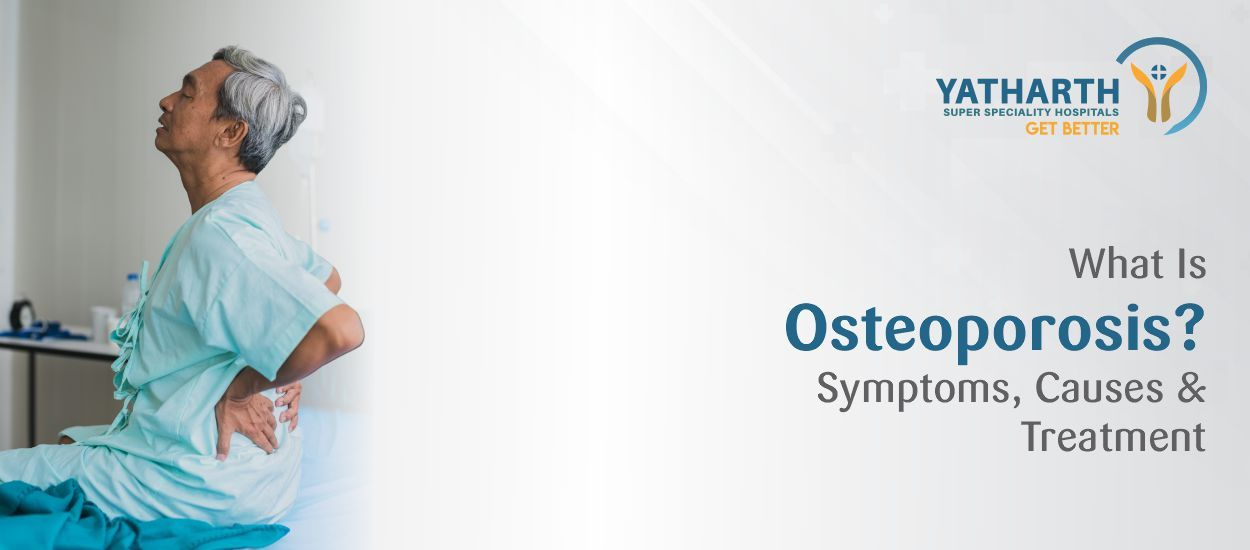


Osteoporosis is a medical condition in which bones become weak, less dense, and more likely to fracture. It develops when the body loses too much bone, produces too little bone, or both. As a result, bones may become fragile and break even after a minor fall or, in severe cases, during everyday activities.
Osteoporosis can affect people of all genders, although the risk increases with age and is particularly common in women after menopause. The condition often develops gradually without noticeable symptoms, which is why it is sometimes called a silent bone disease.
Early diagnosis, appropriate treatment, a balanced diet, regular weight-bearing exercise, and measures to prevent falls can help protect bone health and reduce the risk of fractures.
This article explains what osteoporosis is, its symptoms, causes, risk factors, diagnosis, treatment options, and ways to maintain stronger bones.
What Is Osteoporosis?
Osteoporosis is a bone disease characterised by reduced bone strength and an increased risk of fractures. Healthy bones are living tissues that continuously break down old bone and replace it with new bone. This process is known as bone remodelling.
When bone breakdown occurs faster than new bone formation, bone density and structural strength can decrease. Over time, the bones may become porous and fragile.
Osteoporosis commonly affects the:
- Hip: Fractures can significantly affect mobility and independence.
- Spine: Vertebral fractures may cause back pain, loss of height, and a stooped posture.
- Wrist: Fractures may occur after a fall onto an outstretched hand.
However, osteoporosis can affect other bones as well.
Osteoporosis is different from osteopenia. Osteopenia refers to bone density that is lower than normal but does not meet the bone-density threshold for osteoporosis. It may indicate an increased risk of future bone loss, although not everyone with osteopenia develops osteoporosis.
Importantly, osteoporosis can be present without pain or other obvious symptoms until a fracture occurs. Identifying risk factors and assessing bone density when appropriate can help detect the condition before a serious injury develops.
What Are the Symptoms of Osteoporosis?
Osteoporosis often develops without noticeable symptoms in its early stages. Many people discover they have the condition only after experiencing a fracture.
As bone weakness progresses, the following signs may appear:
- Fractures after minor injuries: A fall from standing height or a relatively minor impact may cause a fracture.
- Persistent back pain: A spinal compression fracture can cause sudden or ongoing back pain.
- Loss of height: Repeated fractures in the vertebrae may gradually reduce a person's height.
- Stooped posture: Spinal fractures can cause the upper back to curve forward, sometimes called a dowager's hump.
- Reduced mobility: Fractures, pain, and fear of falling may make everyday activities more difficult.
- Recurrent fractures: Repeated fractures, particularly in the hip, wrist, or spine, may indicate underlying bone fragility.
Not every person with back pain or reduced height has osteoporosis. However, sudden severe back pain, especially in an older adult or someone with known osteoporosis, should be assessed by a healthcare professional.
Early Warning Signs You Should Not Ignore
Osteoporosis may not produce clear early warning signs, so people at increased risk should discuss appropriate screening with their doctor. Particular reasons to seek assessment include a fracture after a minor fall, long-term use of steroid medicines, early menopause, or a family history of osteoporosis-related hip fractures.
What Causes Osteoporosis?
Osteoporosis develops when bone breakdown exceeds bone formation over time. Several factors can contribute to this imbalance.
Ageing
Bone density generally increases during childhood and young adulthood, reaching its peak in early adulthood. As people age, bone loss can gradually exceed new bone formation, increasing the risk of osteoporosis.
Hormonal Changes
Hormones play an important role in maintaining bone strength.
- Menopause: Falling oestrogen levels can accelerate bone loss in women, especially during the years around menopause.
- Low testosterone: Men with significantly low testosterone levels may be at increased risk of bone loss.
- Thyroid or parathyroid disorders: Certain hormonal conditions can disrupt normal bone metabolism.
Calcium and Vitamin D Deficiency
Calcium is an essential mineral for bone structure, while vitamin D helps the body absorb calcium. Inadequate intake, poor absorption, or certain medical conditions can affect bone health.
Lack of Physical Activity
Bones respond to mechanical loading. Regular weight-bearing and resistance exercises help maintain bone strength and muscle function. Prolonged inactivity or bed rest may contribute to bone loss and increase the risk of falls.
Certain Medical Conditions
Some conditions can increase the risk of osteoporosis, including:
- Rheumatoid arthritis and other inflammatory diseases.
- Coeliac disease and certain conditions affecting nutrient absorption.
- Chronic kidney or liver disease.
- Hyperthyroidism and hyperparathyroidism.
- Conditions that cause low sex hormone levels.
- Some cancers and their treatments.
Long-Term Use of Certain Medicines
Long-term use of oral corticosteroids, such as prednisolone, can increase bone loss. Certain hormone-blocking cancer treatments, anti-seizure medicines, and other medications may also affect bone health.
If you take a medicine that could affect your bones, discuss your risk and possible preventive measures with your doctor. Do not stop prescribed treatment without medical advice.
Who Is at Risk of Developing Osteoporosis?
Although anyone can develop osteoporosis, some people have a higher risk.
|
Risk factor |
Why it matters |
|
Increasing age |
Bone loss becomes more common with age |
|
Postmenopausal status |
Reduced oestrogen can accelerate bone loss |
|
Family history |
Genetics can influence bone density and fracture risk |
|
Previous fragility fracture |
A fracture after a minor injury may indicate weakened bones |
|
Low body weight |
Lower body mass can be associated with reduced bone strength |
|
Poor nutrition |
Inadequate calcium, vitamin D, or protein may affect bone health |
|
Smoking |
Smoking is associated with increased risk of bone loss and fractures |
|
Heavy alcohol consumption |
Excessive alcohol can affect bone health and increase fall risk |
|
Physical inactivity |
Lack of weight-bearing activity may contribute to bone loss |
|
Certain medicines or illnesses |
Some treatments and medical conditions interfere with bone metabolism |
Having one or more risk factors does not mean you will definitely develop osteoporosis. A clinician can assess your overall fracture risk and determine whether testing or preventive treatment is appropriate.
How Is Osteoporosis Diagnosed?
Osteoporosis is diagnosed using a combination of medical history, fracture-risk assessment, physical examination, and bone-density testing where appropriate.
Medical History and Physical Examination
The doctor may ask about previous fractures, family history, menopause, diet, exercise, smoking, alcohol consumption, and medicines that affect bone health.
The examination may include checking height, posture, balance, mobility, and signs of spinal curvature.
Bone Mineral Density Test (DEXA or DXA Scan)
A dual-energy X-ray absorptiometry (DXA) scan is the most commonly used test to measure bone mineral density. It usually assesses the hip and spine.
The test is quick, painless, and uses a low dose of X-rays. It helps identify low bone density and estimate the risk of future fractures.
For postmenopausal women and men aged 50 or older, the World Health Organization's diagnostic classification commonly uses the following T-score thresholds:
|
T-score |
Interpretation |
|
−1.0 or above |
Normal bone density |
|
Below −1.0 but above −2.5 |
Low bone density, also called osteopenia |
|
−2.5 or below |
Osteoporosis |
These thresholds must be interpreted in the appropriate clinical context. In younger adults and premenopausal women, clinicians generally use other criteria, including Z-scores, rather than applying the same T-score classification in isolation. A fracture-risk assessment and medical history also help guide treatment.
Blood and Urine Tests
Blood or urine tests do not diagnose osteoporosis on their own, but they may help identify underlying causes of bone loss. Depending on the patient, investigations may include calcium, vitamin D, kidney function, thyroid function, and other tests.
Fracture-Risk Assessment
Doctors may use clinical risk factors and tools such as FRAX, where appropriate, to estimate the likelihood of a major osteoporotic fracture. The results can help determine whether medication is needed, even when bone density alone does not tell the full story.
What Are the Treatment Options for Osteoporosis?
The main goals of osteoporosis treatment are to strengthen bones where possible, slow bone loss, reduce the risk of fractures, and maintain mobility and independence.
Treatment depends on bone density, previous fractures, age, other medical conditions, and overall fracture risk.
Calcium and Vitamin D
Calcium and vitamin D support normal bone health. Doctors may recommend dietary changes or supplements when intake or levels are inadequate.
Calcium-rich foods include milk, curd, cheese, calcium-fortified foods, and selected green vegetables. Vitamin D is obtained through sources such as fortified foods, oily fish, and appropriate sunlight exposure, although diet and sunlight alone may not meet everyone's needs.
Supplements are not automatically necessary for every person. The amount and type should be selected according to age, diet, laboratory findings, kidney health, and medical advice.
Osteoporosis Medications
Medication may be recommended for people with osteoporosis, a history of fragility fractures, or a sufficiently high fracture risk.
Common treatment categories include:
- Bisphosphonates: Medicines such as alendronate or zoledronic acid that slow bone breakdown and help reduce fracture risk in appropriate patients.
- Denosumab: A medicine that reduces bone resorption and may be used in selected patients. It must be administered according to a treatment plan; delaying or stopping it without a planned alternative can increase the risk of vertebral fractures.
- Bone-forming medicines: Selected patients at very high fracture risk may benefit from medicines that stimulate bone formation, such as teriparatide or abaloparatide.
- Romosozumab: May be considered for selected patients at very high fracture risk, after assessment of cardiovascular risks and other contraindications.
- Other specialist-directed treatments: Depending on the patient's age, menopausal status, fracture risk, and medical history, other options may be appropriate.
Each medicine has specific benefits, risks, and eligibility criteria. A doctor should select treatment based on the individual's clinical circumstances.
Weight-Bearing and Resistance Exercises
Physical activity can help maintain bone strength, improve muscle function, and reduce the risk of falls.
Examples may include:
- Walking, if appropriate for your health and mobility.
- Resistance exercises using weights or resistance bands.
- Balance exercises, such as supervised balance training.
- Exercises to strengthen the legs, back, and core muscles.
People with severe osteoporosis or previous spinal fractures should seek professional guidance before starting a new exercise programme. High-impact activity, forceful twisting, and repeated deep forward bending may be unsuitable for some patients.
Fall Prevention
Preventing falls is an important part of osteoporosis care because weak bones are more likely to fracture during an accident.
Helpful measures include:
- Removing loose rugs, clutter, and other tripping hazards.
- Installing suitable lighting and handrails.
- Using supportive footwear.
- Checking vision and hearing when needed.
- Reviewing medicines that may cause dizziness or drowsiness.
- Using a walking aid if recommended.
Treatment of Underlying Conditions
If osteoporosis is related to a hormonal disorder, nutritional deficiency, medication, or another medical condition, addressing that underlying problem may be an important part of treatment.
Do not stop long-term corticosteroids or other prescribed medicines on your own. Your doctor can assess whether the dose, treatment duration, or bone-protection strategy needs adjustment.
How Can Osteoporosis Be Prevented?
Although not all cases of osteoporosis can be prevented, healthy lifestyle habits can help build and maintain stronger bones and reduce fracture risk.
Eat a Balanced, Bone-Healthy Diet
Include calcium-rich foods, adequate protein, fruits, vegetables, and vitamin D sources in your diet. If you have dietary restrictions or a condition that affects nutrient absorption, ask your doctor or dietitian how to meet your nutritional needs.
Exercise Regularly
Weight-bearing and resistance exercises help maintain bone and muscle strength. Walking, strength training, and suitable balance exercises can be beneficial. Choose activities according to your age, fitness level, and medical history.
Avoid Smoking and Excessive Alcohol
Smoking and heavy alcohol consumption are associated with poorer bone health and increased fracture risk. Avoid smoking and seek support if you need help reducing alcohol consumption.
Get Assessed if You Have Risk Factors
Ask your doctor whether you need a bone-density test if you have experienced a fracture after a minor fall, have a strong family history of osteoporosis, have undergone early menopause, or take long-term corticosteroids.
Reduce the Risk of Falls
Keep your home free of tripping hazards, maintain good lighting, wear suitable footwear, and seek help for balance or mobility difficulties.
These steps can support bone health, but people who already have osteoporosis may also need medication to reduce their risk of fractures.
When Should You Consult a Doctor?
Consult a healthcare professional if you have risk factors for osteoporosis, have lost height over time, experience persistent or unexplained back pain, or have sustained a fracture after a minor fall.
Seek urgent medical assessment after a suspected fracture, particularly if you have severe pain, cannot bear weight, or have difficulty moving after a fall.
Sudden severe back pain in a person with osteoporosis may indicate a vertebral fracture and should not be ignored. Early diagnosis and appropriate treatment can help prevent further fractures and preserve quality of life.
Conclusion
Osteoporosis is a common bone disease that weakens bones and increases the risk of fractures. Because it often develops without noticeable symptoms, identifying risk factors and arranging appropriate bone-density testing can be important for early diagnosis.
A combination of adequate nutrition, regular suitable exercise, fall prevention, and medical treatment when indicated can help protect bone health and reduce fracture risk.
If you are concerned about osteoporosis, have experienced a fracture after a minor fall, or have risk factors for bone loss, consult a healthcare professional for an individual assessment and treatment plan.