

7 Tips for Post-Operative Shoulder Surgery
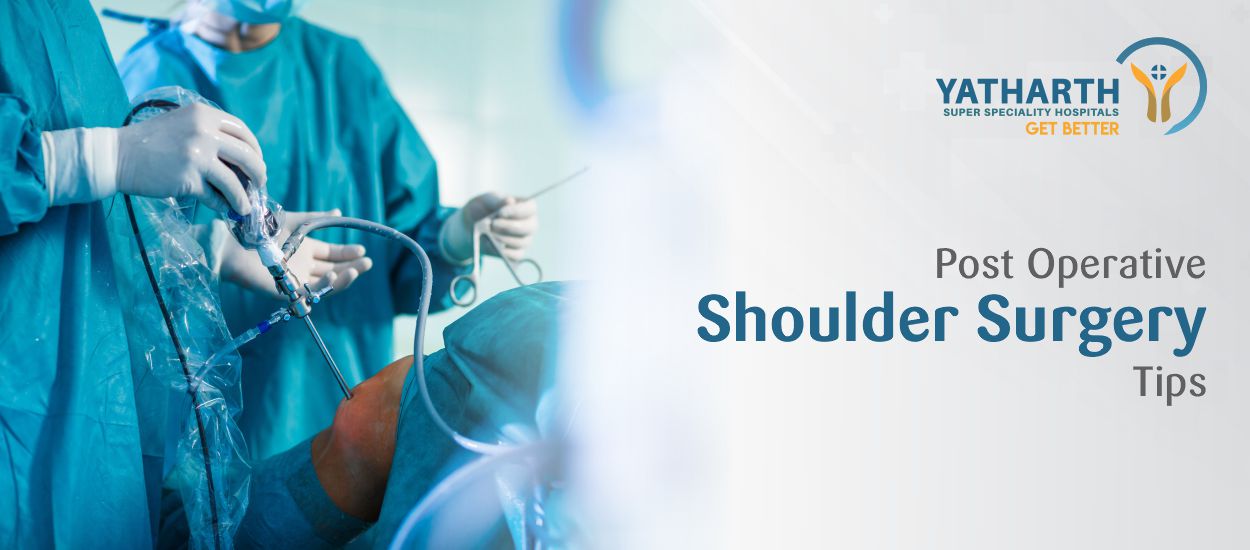
In the whole body, the shoulder is amongst one of the most flexible joints responsible for most of the upper body movements. And the same flexibility and wide range of motion can make it vulnerable to injuries such as dislocation, rotator cuff tears, and fractures. The speed and pain tangled in healing from shoulder surgery depend on many factors such as the type of surgical procedure you had, the presence of any complications if any, the obedience of physician instructions, consistency in rehabilitation performance, physical therapy exercises and many more. Recovery can be an enduring process but you can consider yourself to be lucky if you’re in Noida as you can find some of the best orthopaedic doctors in Delhi NCR, Noida.
Even the thought of your arm being placed inside the sling for days, restricting your movements and activities after shoulder surgery, can be quite worrying. But there are some steps you can take to lessen the restrictions and speed up the recovery process. You need to understand the anatomy of the shoulder in order to understand the process.
The shoulder, being the complex joint responsible for much more movements than any other joint in the body, is made up of bones namely –
- Clavicle, or the collar bone
- Humerus, or the upper arm bone
- Scapula, or the shoulder bone
Apart from bones, other components responsible for function and movement are –
- Ball and socket – The head of the upper arm bone fits into your shoulder blade through the glenoid, which is a round-shaped socket. A slippery tissue known as articular cartilage covers the surface of your ball and socket. It creates a smooth and frictionless surface helping your bones to easily move and glide across one another.
- Shoulder capsule – Ligaments are bands of tissues that surround your joint to form a capsule that holds it together. A thin membrane called synovium, line the undersurface of the capsule. It creates synovial fluid which acts as a lubricant for your shoulder joint.
- Rotator cuff – There are four tendons around your shoulder capsule that keeps your arm bone in the centre of your shoulder socket. This thick tendon material is your rotator cuff and it covers your humerus head, attaching it to your shoulder blade.
- Bursa – The lubricating pouch between the top of the shoulder and your rotator cuff is known as Bursa. The smooth movement and gliding of your rotator cuff on the movement of your arm are because of the bursa only.
Now, coming to the recovery process, the anticipation of surgery and recovery from the procedure is something that’ll fill your mind with different questions. Many people take into account what to do before the surgery but there are some vital points that one should remember to value during the post-operative procedure as well for a healthy and speedy recovery. Some of the points are –
1. Strictly follow your surgeon’s instructions
The instructions given by a professionally skilled and experienced surgeon for postoperative recovery are meant to ensure a positive surgical outcome and a speedy recovery.
2. Application of ice or something cold
Putting ice or something cold on the shoulder for short periods (10 minutes at a time) frequently after the shoulder surgery will help in reducing the swelling, inflammation, and pain. Alternatives for ice such as ice bags, cold therapy devices and even frozen bags of peas can be used for cooling the shoulder.
3. Using the medications for pain only as per recommendation
The use of prescribed pain medications in the after-hours of the surgery can help you stay ahead of the pain while keeping it under control.
4. Finding a good sleeping position
During the recovery process from shoulder surgery, it can be difficult and challenging to find an appropriate sleeping position. You can try different sleeping positions like a reclined position instead of the flat back position or even experiment with a new position to find out which suits you best.
5. Proper nutrition
For a speedy and healthy recovery, your body needs more nutrients than usual in the healing process. One should focus on food sources that are high in vitamin C and E. Also, lean proteins would be helpful as they provide building blocks used by the body to repair and heal your shoulder after surgery.
6. Physical therapy
Although your arm will be resting in a sling for the first couple of weeks, physical therapy may come to be of great use. Highly trained doctors assess your condition after your shoulder surgery and based on their observation, they make an effective physical therapy programme that ensures a smooth and speedy recovery after the surgery.
7. Practice Patience
Try not to rush the process. Participate in the physical therapy program, take your time and get back to daily activities at the pace advised by your surgeon or physical therapist. Do not try to do so much too soon. Recovering from shoulder surgery can be tough, but one needs to be tougher and if you’re in Noida, you can find the best orthopaedic doctors in Noida with complete and effective services.