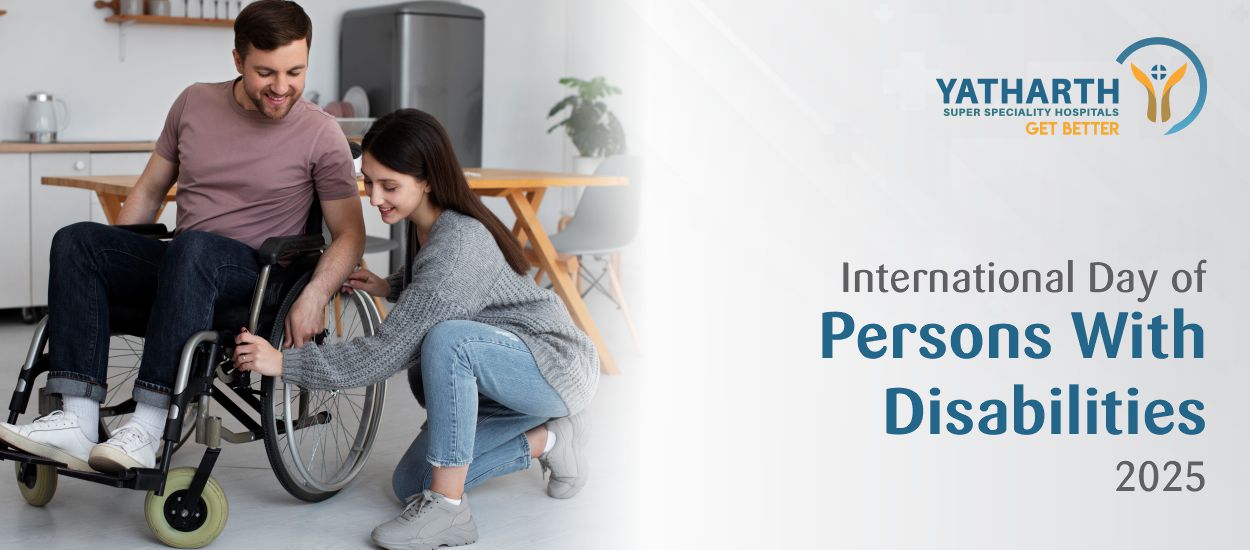


The International Day of Persons with Disabilities 2025, observed on 3rd December, invites the world to reflect on how inclusive our societies truly are. Commonly referred to as IDPD 2025 or Disability Day 2025, this global observance is not limited to speeches or campaigns—it is a call to rethink attitudes, environments, and systems that shape everyday life for persons with disabilities.
Seeing the Reality Behind Disability Day 2025
For many individuals, disability is not defined by physical or mental conditions alone, but by the barriers created around them. The challenges faced by persons with disabilities often include limited mobility, communication gaps, social exclusion, and unequal access to education and healthcare. IDPD 2025 encourages honest conversations about these lived realities and highlights the need for long-term disability empowerment, not temporary solutions.
Disability Inclusion Starts with Accessible Environments
True disability inclusion becomes visible when public spaces and services are designed for everyone. Accessibility for persons with disabilities includes step-free access, assistive technology, readable signage, and inclusive digital platforms. Schools, hospitals, transport systems, and workplaces must adopt disability-friendly infrastructure to ensure safety, independence, and dignity. Accessibility is not an adjustment—it is a basic necessity.
Disability Rights Awareness and Equality in Action
Raising disability rights awareness is central to achieving disability equality. Awareness helps communities understand that the rights of persons with disabilities include equal participation, informed choice, and respect. When rights are acknowledged and protected, individuals are empowered to pursue education, employment and healthcare without discrimination or dependence.
Physical and Mental Health Support Matters
Healthcare plays a vital role in improving quality of life. Physical disability support, such as rehabilitation therapy, mobility aids, and long-term care planning, enables functional independence. Equally important is mental disability awareness, as psychological and cognitive conditions are often misunderstood or overlooked. Early intervention, counselling, and social
support reduce isolation and improve emotional well-being.
Inclusive Communities and Breaking Disability Stigma
Strong societies are built through inclusive communities where diversity is accepted and valued. Breaking disability stigma begins with everyday actions—using respectful language, encouraging participation, and challenging stereotypes. Families, educators, employers, and healthcare professionals all contribute to environments where individuals are recognised for their abilities, not limitations.
Global Disability Awareness and Shared Responsibility
Global disability awareness reminds us that inclusion is a shared responsibility across borders. Collaboration between governments, healthcare systems, and communities strengthens support for disabled individuals worldwide. International Day of Persons with Disabilities 2025 reinforces the idea that inclusive progress benefits everyone, not just a few.
Moving Forward After IDPD 2025
As IDPD 2025 is observed, the real impact lies in what follows. By promoting accessibility, equality, and respect every day, we move closer to a society where disability does not limit opportunity. IDPD 2025 is a reminder that inclusion is not a one-day effort—it is a continuous commitment.