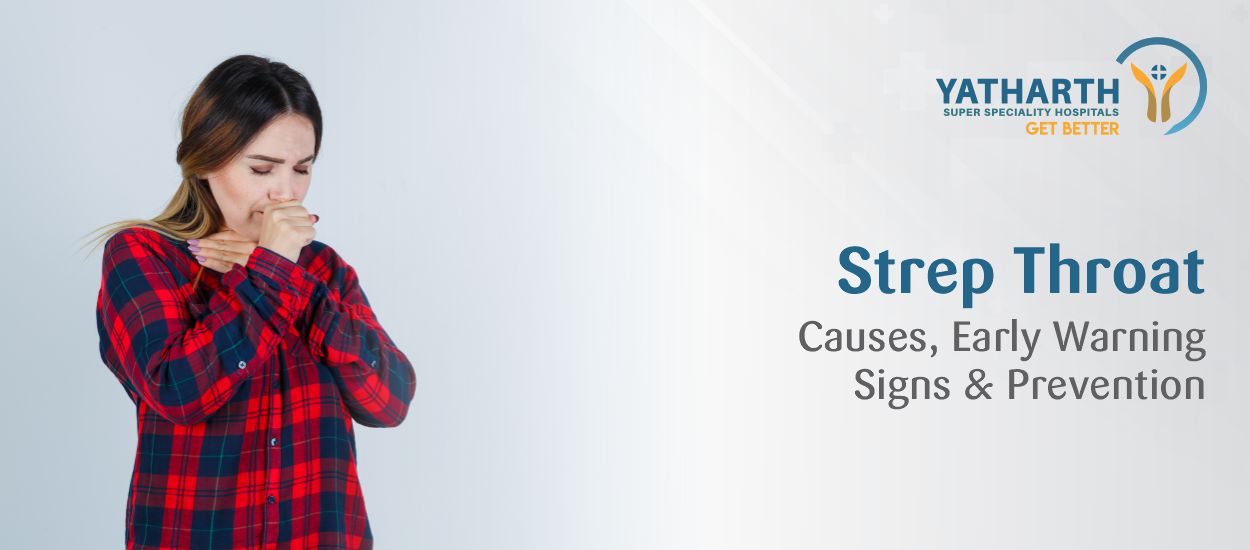
Strep Throat: Causes, Early Warning Signs and Prevention

Strep Throat: Causes, Early Warning Signs and Prevention

Table of Contents

    Strep Throat is an infection that occur in throat causing tonsils. It can cause pain when swallowing, fever and make your throat feel sore and scratchy. Strep throat is commonly in children when season change but can affect all age groups. It spreads easily through respiratory droplets when an infected person coughs, sneezes, or talks. You can be infected by touching contaminated surfaces and then touching your mouth or nose.

    What are the symptoms of Strep Throat?

    The most common symptom of Strep Throat is your throat suddenly feel sore and scratchy. You will have fever and headache. Other symptoms are:

    • Loss of appetite
    • Abdominal Pain
    • Vomiting
    • Bodyache
    • Rash
    • Neck swollen

    Causes

    A type of bacteria known as group A Streptococcus (group A strep) causes strep throat. This makes strep throat different from most other cases of sore throat, which occur due to viruses.

    How it is Diagnoised?

    When you have strep throat consult your doctor immediately. Usually, Strep throat is treated with antibiotics. Many symptoms usually start to improve within 24–48 hours after starting antibiotics, but it is very important to complete the full course, even if you feel little better.

    To feel relaxed from these symptoms at home, you can always:

    • Drink warm fluids like tea or soup
    • Gargle with salt water
    • Use throat lozenges
    • Get plenty of rest
    • Take pain relievers (as advised by a doctor)

    Strep throat is bacterial infection that needs proper medical attention. With timely diagnosis, appropriate antibiotics, and good self-care, most people recover quickly and without complications. 

    Frequently Asked Questions

    What are the early signs of strep throat?

    Early signs are sudden sore throat, fever, pain while swallowing, swollen lymph nodes, and red or white patches on the tonsils.

    How is strep throat different from a regular sore throat?

    Strep throat is caused by bacteria and comes with fever and tonsils, which are common with viral sore throats.

    Can strep throat go away on its own?

    Strep throat may improve on its own, but antibiotics are strongly recommended to prevent serious complications.

    What antibiotics are used to treat strep throat?

    Doctors commonly prescribe penicillin or amoxicillin. If you are allergic to penicillin, alternative antibiotics are available.

    When should I see a doctor for a sore throat?

    You should see a doctor if the sore throat is serious. It lasts more than two days, in which you will have a fever or it will occur without cold symptoms.

    How long does strep throat last?

    With antibiotics, symptoms usually improve within 1–2 days, and full recovery occurs in about 7–10 days.

    Can adults get strep throat?

    Yes. Although it’s more common in children, adults can also get strep throat, especially those in close contact with children.

    Can strep throat come back?

    Yes, strep throat is possible to come back if antibiotics are not completed or due to repeated exposure to infected individuals.

    Are home remedies enough to treat strep throat?

    Home remedies can relieve symptoms, but they cannot cure strep throat. Antibiotics are necessary to eliminate the bacteria.

    Most Read Blogs
    How to remove injury marks on the face

    When individuals are comfortable and confident, they tend to look their best. On the other hand, accidents or injuries t...

    World AIDS Day 2025: Ending Stigma Through Awareness and Education

    World AIDS Day 2025 is observed on December 1st, marking a global commitment to raise awareness about HIV, support peopl...

    Rhinoplasty: The Days Before and After Your Nose Job

    Commonly called a ‘nose job’, rhinoplasty remains one of the most popular forms of cosmetic surgery for people seeki...

    Why Heart Attacks Rise in Winter and How to Prevent Them

    It is common knowledge that heart attacks occur more often in winter. The drop in temperature in cold weather can impact...

    Related Blogs
    Rhinoplasty: The Days Before and After Your Nose Job

    Commonly called a ‘nose job’, rhinoplasty remains one of the most popular forms of cosmetic surgery for people seeki...

    How to Check Whether Your Child is a Candidate for a Cochlear Implant

    The world of sound helps a child learn how to speak, read and write via listening. Hearing loss affects the areas that a...

    Enquire Now