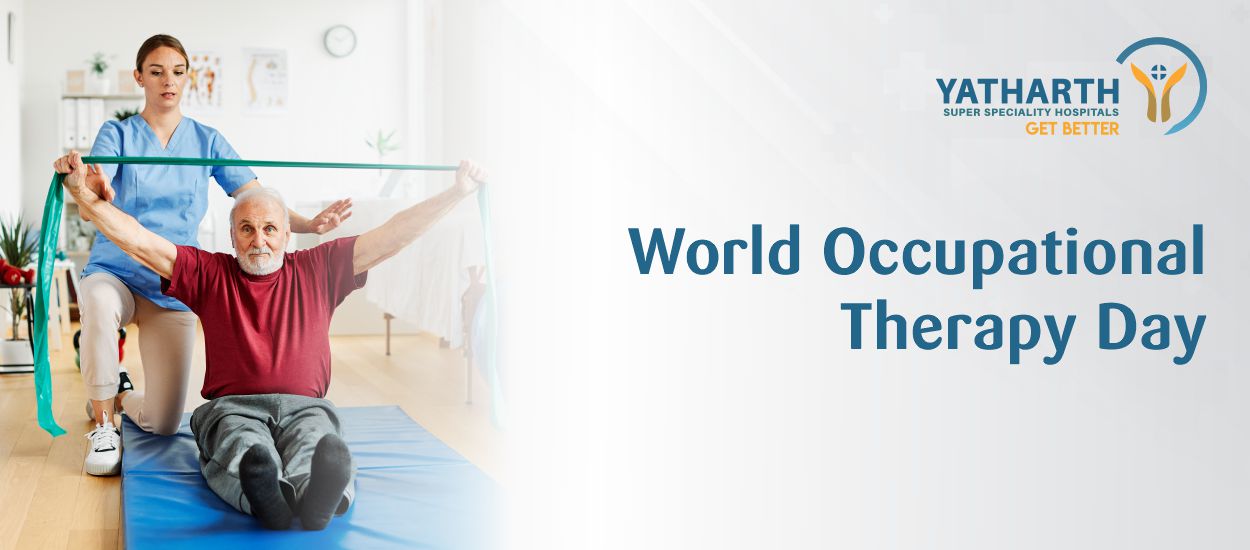


World Occupational Therapy Day 2026 will be observed on Tuesday, October 27, 2026, to recognize the important role of occupational therapy in helping people participate in meaningful everyday activities and achieve greater independence.
Occupational therapy is much more than helping someone return to work. It supports people across the lifespan who may have difficulty performing everyday activities because of illness, injury, disability, developmental conditions, ageing or changes in physical or mental health.
The World Federation of Occupational Therapists (WFOT) established World Occupational Therapy Day, observed annually on October 27, to raise awareness about occupational therapy and its contribution to health, wellbeing and participation.
What is World Occupational Therapy Day?
World Occupational Therapy Day is observed every year on October 27.
The day provides an opportunity to:
- Increase awareness about occupational therapy
- Explain what occupational therapists do
- Highlight the importance of independence and participation
- Recognize occupational therapy professionals
- Promote inclusion and accessibility
- Educate patients and families about rehabilitation
- Show how meaningful activities can contribute to health and wellbeing
WFOT represents occupational therapy internationally and works to advance the profession and improve access to occupational therapy services.
What is Occupational Therapy?
Occupational therapy is a healthcare profession that helps people participate in the activities that are meaningful and necessary in their daily lives.
Here, the word "occupation" does not simply mean employment.
An occupation can be any meaningful activity that a person needs, wants, or is expected to do.
Examples include:
- Getting dressed
- Eating
- Bathing
- Walking around the home
- Cooking
- Studying
- Working
- Playing
- Caring for children
- Managing household activities
- Socializing
- Participating in hobbies
- Using a computer
- Returning to community activities
The goal of occupational therapy is to help people perform these activities as independently, safely and effectively as possible.
Who Can Benefit From Occupational Therapy?
Occupational therapy can help people of all ages.
It may be useful for:
- Children with developmental difficulties
- People recovering from stroke
- Individuals with neurological conditions
- People recovering from injuries
- Patients after surgery
- People with hand injuries
- Individuals with spinal cord injuries
- People living with arthritis
- Older adults experiencing functional decline
- People with disabilities
- Individuals experiencing mental-health challenges
- People with difficulties performing daily activities
Occupational therapy is therefore not limited to one age group or one medical condition.
What Does an Occupational Therapist Do?
An occupational therapist evaluates how a person's health condition affects their ability to perform everyday activities.
The therapist may assess:
Physical abilities
- Strength
- Range of motion
- Coordination
- Balance
- Endurance
- Fine motor skills
- Gross motor skills
Cognitive abilities
- Memory
- Attention
- Problem-solving
- Planning
- Organization
Functional abilities
- Dressing
- Eating
- Bathing
- Writing
- Cooking
- Working
- Using tools
- Managing household activities
Environmental factors
The therapist may also assess whether the person's home, workplace, school or community environment creates barriers to independence.
Occupational Therapy vs Physiotherapy: What's the Difference?
This is one of the most common questions.
Both professions contribute to rehabilitation, but their focus can differ.
Physiotherapy
Physiotherapy often focuses on:
- Movement
- Strength
- Mobility
- Balance
- Pain
- Physical function
- Recovery of movement
Occupational Therapy
Occupational therapy focuses particularly on:
- Performing everyday activities
- Independence
- Self-care
- Work and education
- Fine motor skills
- Cognitive and functional abilities
- Adapting activities or environments
- Participation in meaningful occupations
There is considerable overlap, and physiotherapists and occupational therapists often work together as part of a multidisciplinary rehabilitation team.
Why Is Occupational Therapy Important After a Stroke?
Stroke can affect:
- Movement
- Balance
- Coordination
- Speech
- Vision
- Memory
- Attention
- Problem-solving
- Ability to perform everyday activities
A person may regain some physical strength but still struggle with activities such as:
- Getting dressed
- Using a spoon
- Writing
- Bathing
- Preparing food
- Returning to work
- Managing household tasks
Occupational therapy can help identify these challenges and develop strategies to improve independence.
Occupational Therapy After Brain Injury
Traumatic brain injury can affect both physical and cognitive abilities.
Occupational therapy may address:
- Memory problems
- Attention difficulties
- Reduced coordination
- Fatigue
- Problem-solving
- Planning
- Self-care
- Return to work or education
- Community participation
The rehabilitation programme depends on the person's specific symptoms and goals.
Occupational Therapy for Hand Injuries
The hands are essential for countless daily activities.
Hand injuries can interfere with:
- Writing
- Typing
- Eating
- Dressing
- Cooking
- Driving
- Using tools
- Working
Occupational therapists with specialized training in hand therapy may work on:
- Range of motion
- Strength
- Coordination
- Dexterity
- Scar management
- Splinting
- Functional retraining
The treatment depends on the injury, surgery and rehabilitation goals.
Occupational Therapy for Children
Occupational therapy can be particularly valuable in paediatric care.
Children may receive occupational therapy for difficulties involving:
- Fine motor skills
- Handwriting
- Dressing
- Feeding
- Sensory processing
- Coordination
- Play skills
- Attention
- School participation
- Developmental skills
The objective is not simply to improve a particular physical skill.
It is to help the child participate more successfully in home, school and social activities.
What Is Sensory Integration?
Sensory integration refers to how the nervous system receives and organizes information from the senses so that a person can respond appropriately to their environment.
Children may sometimes have difficulties processing sensory information.
Occupational therapists may use individualized activities and environmental strategies to help children participate in daily activities.
Assessment should be individualized because sensory-related behaviours can have many possible explanations.
Occupational Therapy and Autism
Occupational therapists may support some autistic children and adults with challenges related to:
- Daily routines
- Self-care
- Sensory processing
- Fine motor skills
- School participation
- Work activities
- Environmental adaptation
- Community participation
The goals should be individualized and focused on meaningful participation and functional needs.
Occupational therapy does not "cure" autism. Instead, it can help a person develop strategies and adaptations that support participation and independence.
Occupational Therapy for Older Adults
Ageing can sometimes affect:
- Strength
- Balance
- Vision
- Memory
- Coordination
- Mobility
- Ability to perform daily activities
Occupational therapy can help older adults remain as independent and safe as possible.
This may involve:
- Home safety assessment
- Fall prevention
- Adaptive equipment
- Self-care strategies
- Energy conservation
- Cognitive strategies
- Modification of daily routines
The goal is often to help the individual continue living safely and participating in activities that matter to them.
Occupational Therapy and Fall Prevention
Falls are an important concern, particularly among older adults.
An occupational therapist may identify environmental hazards such as:
- Loose rugs
- Poor lighting
- Clutter
- Unsafe bathroom arrangements
- Difficult-to-reach objects
- Lack of appropriate support
They may recommend changes such as:
- Grab bars
- Bathroom modifications
- Better lighting
- Rearrangement of furniture
- Appropriate assistive equipment
Fall prevention is often most effective when multiple risk factors are addressed.
Occupational Therapy in Mental Health
Occupational therapy has applications beyond physical rehabilitation.
Occupational therapists can also work with people experiencing mental-health challenges.
They may help individuals develop strategies for:
- Establishing routines
- Managing daily activities
- Returning to education
- Returning to employment
- Managing stress
- Developing coping strategies
- Building social participation
- Improving functional independence
The focus is on how health affects a person's ability to participate in meaningful everyday life.
Occupational Therapy After Surgery
Following surgery, a person may temporarily have difficulty performing routine activities.
Depending on the procedure, occupational therapy may help with:
- Safe movement
- Dressing
- Bathing
- Transfers
- Using assistive devices
- Returning to work
- Adapting activities
- Managing energy
The need for occupational therapy depends on the surgery and the individual's functional limitations.
Assistive Devices in Occupational Therapy
Occupational therapists may recommend or train people to use assistive devices when appropriate.
Examples include:
- Walking aids
- Dressing aids
- Adaptive eating utensils
- Shower chairs
- Grab bars
- Wheelchairs
- Communication devices
- Specialized computer equipment
The device should be selected based on the person's needs, environment and goals.
What Is an Occupational Therapy Assessment?
An occupational therapy assessment looks at the relationship between:
Person + Activity + Environment
The therapist may ask:
- What activities are difficult?
- What activities are important to you?
- What physical limitations are present?
- Are there cognitive difficulties?
- What environmental barriers exist?
- What adaptations could help?
- What skills need to be developed?
This makes occupational therapy highly individualized.
Why Is Goal Setting Important?
Rehabilitation is most meaningful when goals are connected to real-life activities.
Instead of simply saying:
"Improve hand strength."
A functional goal might be:
"Be able to hold a cup independently."
Or:
"Return to typing at work."
Or:
"Dress independently."
Functional goals help patients understand why therapy exercises and activities matter.
Occupational Therapy and Return to Work
Returning to work after illness or injury can be challenging.
Occupational therapists may help evaluate:
- Physical requirements of the job
- Cognitive demands
- Work environment
- Fatigue
- Hand function
- Mobility
- Workplace safety
They may also suggest appropriate workplace modifications or graded return-to-work strategies where appropriate.
Occupational Therapy and Rehabilitation
Rehabilitation is not simply about making a person stronger.
It is about helping them use their abilities in real-life situations.
For example, after a stroke:
Strength → Coordination → Reaching → Grasping → Holding a cup → Eating independently
Occupational therapy helps connect physical and cognitive abilities to everyday participation.
Occupational Therapy and Independence
One of the central goals of occupational therapy is functional independence.
Independence doesn't necessarily mean doing everything without assistance.
Sometimes independence means:
- Using an adaptive device
- Changing the way an activity is performed
- Modifying the environment
- Learning a new strategy
- Using caregiver support appropriately
The ultimate goal is to maximize safe participation according to the person's abilities and preferences.
Common Myths About Occupational Therapy
Myth 1: "Occupational therapy is only for people with disabilities."
Fact: Occupational therapy can help people with injuries, illnesses, developmental conditions, ageing-related changes and temporary functional difficulties.
Myth 2: "Occupational therapy is only about jobs."
Fact: "Occupation" includes all meaningful daily activities—not just employment.
Myth 3: "Only adults need occupational therapy."
Fact: Children, adults and older adults can all benefit from occupational therapy.
Myth 4: "Occupational therapy and physiotherapy are the same."
Fact: They overlap in rehabilitation but have different areas of emphasis. Occupational therapy particularly focuses on functional activities and participation in everyday life.
Myth 5: "Occupational therapy is only exercise."
Fact: Occupational therapy may include exercises, but it can also involve functional training, cognitive strategies, adaptive equipment, environmental modifications and activity-based interventions.
Myth 6: "You only need occupational therapy after a major injury."
Fact: Occupational therapy can also help with developmental, neurological, musculoskeletal, cognitive and mental-health-related challenges.