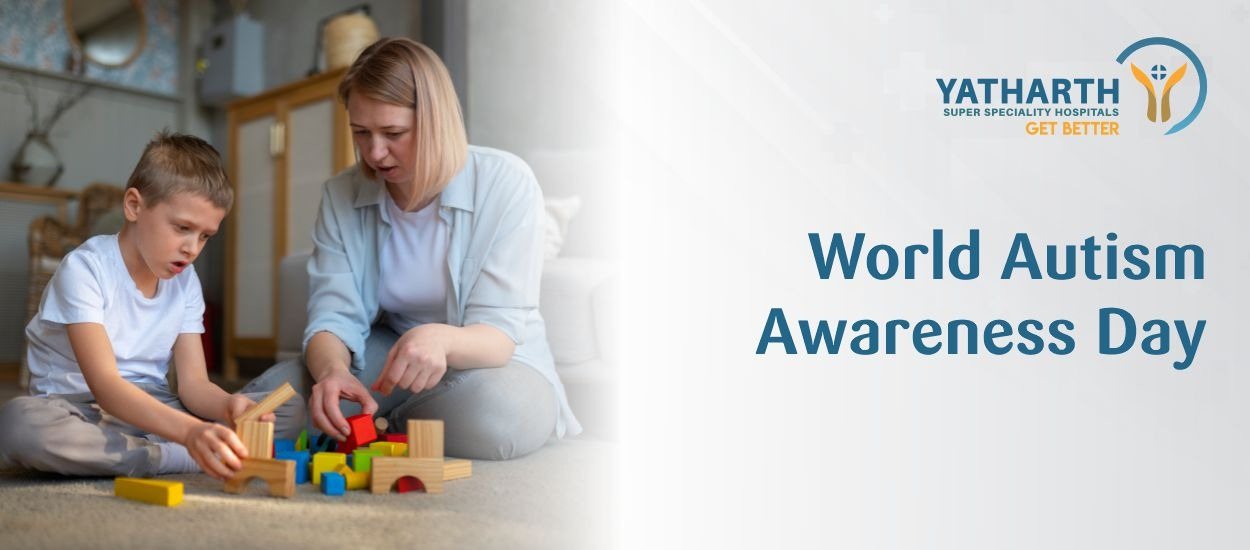


Each year on 2 April, World Autism Awareness Day is observed this year held under the theme “Autism and Humanity – Every Life Has Value”. It's a day to remind us that people with autism are entitled to equal access, support and inclusion in all areas of life.
Autism Awareness Day 2026 is about more than raising awareness – it is about inspiring communities to create a world in which people on the autism spectrum can flourish. Raising awareness enables families to detect the early symptoms, get appropriate medical advice and support and help girls and women with autism.
In this blog post you will get to know about autism spectrum disorder (ASD), key facts about autism, early detection of autism, how to care for those with autism and what we, as a society can do to help foster autism inclusion and advocacy.
What Is Autism Spectrum Disorder?
Autism spectrum disorder (ASD) is a developmental disorder that impacts how a person communicates and interacts with others, as well as how they think and perceive the world. The term ‘spectrum’ is used to convey how autism presents itself differently between individuals and can range in complexity and signs.
Some people with autism require a great deal of support every day, but others can live on their own with little help.
- Signs of autism spectrum disorder can include:
- Problems with social communication and interaction
- Repetitive behaviors or restricted interests are also core features.
- Sensitivity to noise, light or certain textures
- Difficulty reading social cues
- Love of routine and structured surroundings
It is also vital to note that no two people with autism are the same.
Why World Autism Awareness Day 2026 is Important
Building understanding and challenging negative perceptions about autism is at the heart of World Autism Awareness Day 2026. There are still misconceptions surrounding autism that many families have to fight against, sometimes meaning diagnosis is delayed and they don’t have the support they deserve.
Objectives for Autism Awareness Day 2026
- Raising Public Awareness of Autism Spectrum Disorders
- Encouraging early detection of autism and its earliest intervention.
- Supporting autism inclusion by way of educating students and colleagues in schools and workplaces.
- Advancing global autism awareness.
- Community Awareness to create a more positive and accepting community for people with autism.
Important Things you should know about Autism
Here are some key things to know about autism:
- Autism is a lifelong condition, though early intervention can do a lot to enhance a person's life.
- Autism can be found in all racial, ethnic and cultural groups.
- Early identification and intervention can greatly improve communication and social development.
- A large number of autistic people have exceptional skills in certain areas such as memory, mathematics, music or art.
- Autism is not a disease and does not have a “cure” but it needs to be met with understanding, support and acceptance.
Significance of Early Detection of Autism Disorder
Early detection of ASD is one of the most crucial factors in autism treatment. Its identification of developmental atypicality in individuals at an early point in time can provide children with early therapy and intervention.
Parents should contact a healthcare provider if they observe signs including:
- Eye contact that is limited
- Speech or language delay Talk soon! Flag this item
- Not responding to name
Living with Autism: Understanding Daily Challenges
Living with autism is challenging, but with good support and understanding, people with autism can have a full life.
People on the autism spectrum may experience:
- Trouble with change
- Sensory overload (in busy streets, trains, planes and so forth) and quiet/comfortable places are sometimes considered synonymous by people with autism.
- Difficulty expressing emotions or interpreting feelings of others.
Yet, numerous people with autism prove to be extraordinarily gifted in areas such as:
- Great attention to details
- Good memory
- Intense concentration on a particular subject of interest
- Innovative and logical thinking
- It is vital to acknowledge these strengths, as this can help build confidence and independence for those living with autism.
- Trouble making friends
- Repeated hand-flapping or rocking
- Early diagnosis ensures that children have access to speech therapy, behavioral therapy, and special education programs that promote long-term development .
- Health care providers must also play a crucial role in taking parents from one direction to another and to better be prepared to assist with the appropriate resources for Autism Support.”
Tips for the Care of Autism at Home for Families and Caregiver
When it comes to raising a child with autism, having the right information and support can help you feel less overwhelmed and more empowered to make a positive difference in your little one's life.
Here are a few helpful tips on caring for those with autism:
1. Develop a Predictable Routine
Individuals with autism are known to benefit from having predictable routines.
2. Promote interaction
Use visual cues, simple words, and patience to enhance communication.
3. Offer a Sensory-Friendly Space
Reduce the volume of noise or distractions, if you can.
4. Seek Professional Assistance
Therapies including speech therapy, occupational therapy and behavioral therapy aid in enhancing developmental skills.
Fostering Autism Acceptance in the Community
Real awareness is more than a matter of "knowing" — it involves doing. Inclusion for people with autism means that they are given equal opportunities in education, work, and social life.
Autism acceptance Schools and workplaces can contribute to autism inclusion:
- Creating inclusive classrooms
- Availability of tailored educational support
- Facilitating understanding for friends and colleagues
- Building sensory-friendly environments
A culture of inclusion enables people with autism to realize their potential and to engage fully in the world around them.
Role of Autism Advocacy
Advocacy for autistic individuals and families is vital to advancing their quality of life.
Here are some ways you can get involved with autism advocacy:
- Raising awareness about autism spectrum disorder
- Donating to groups that offer services to those with autism
- Advocating for inclusive policies in schools and workplaces
- Fostering respectful and empathetic discussions of the condition
When communities engage with autism advocacy, they create stronger allies and a more empathetic society.
Conclusion
we can make a world where people with autism are embraced, valued and empowered.
With greater understanding, appropriate support for autism and empathetic communities, those who have autism can have meaningful, successful and satisfying lives.
Let Autism Awareness Day 2026 serve as a beacon to remind us that acceptance, education and platform can help turn the tide of oppression.