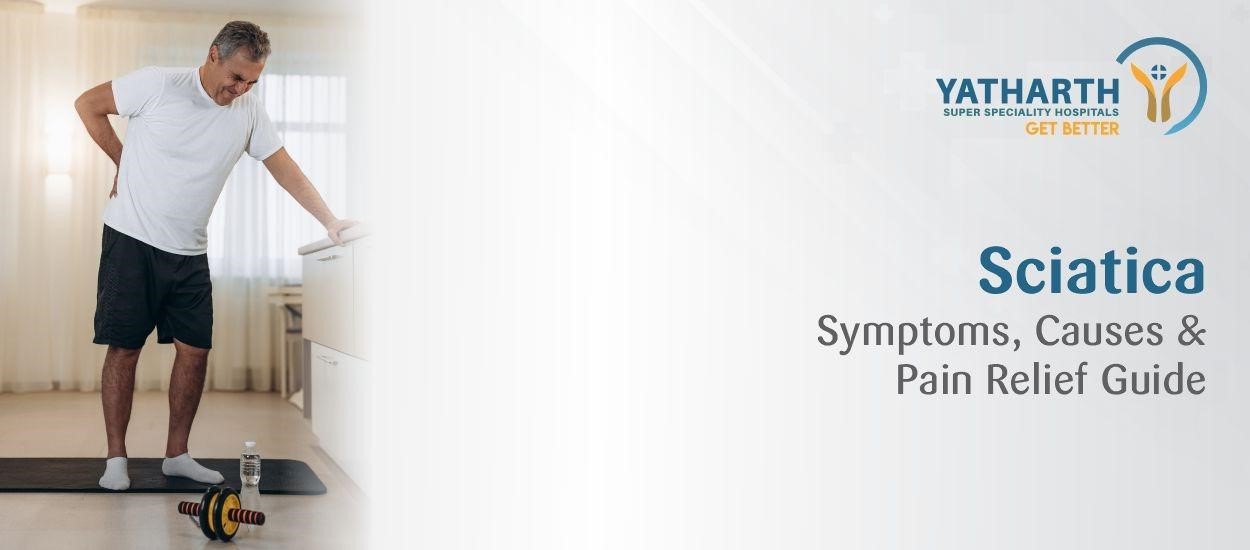


10% to 40% of people experience sciatica at some point in life (NCBI). Sciatica refers to pain caused by irritation or compression of the sciatic nerve, which runs from the lower back down each leg. The pain typically starts in the lumbar spine and travels through the buttock into the leg, often affecting only one side of the body.
Over 80% of cases present with one-sided symptoms (Mayo Clinic). Patients report sharp, burning, or shooting pain, along with tingling or numbness in the affected leg. The intensity varies from mild discomfort to severe pain that interferes with standing, walking, or sitting.
Sedentary work patterns in Delhi increase exposure to risk factors such as prolonged sitting and poor posture. Disc-related issues, which contribute to up to 90% of cases, commonly trigger nerve compression. This guide covers symptoms, causes, pain relief options, and physiotherapy-based treatment approaches relevant to patients in Delhi.
Sciatica Symptoms in Delhi Patients: Pain Patterns and Warning Signs
Over 80% of sciatica cases affect only one side of the body. Patients in Delhi commonly report pain that starts in the lower back and travels through the buttock into one leg. The pain follows the path of the sciatic nerve and may extend down to the calf or foot.
Pain intensity ranges from mild discomfort to severe shooting pain that limits movement. Patients describe the sensation as sharp, burning, or electric-like. The pain increases during prolonged sitting, standing, or sudden movements such as bending or coughing.
Tingling and numbness occur along the nerve pathway in many cases. Patients often feel pins-and-needles sensations in the leg or foot. In some cases, numbness reduces the ability to feel touch or temperature in the affected area.
Muscle weakness develops when nerve compression persists. Patients may experience difficulty lifting the foot or bending the knee. This condition, often referred to as foot drop, affects walking stability and balance.
Pain worsens with specific daily activities common in Delhi lifestyles. Long desk hours, driving in traffic, and poor sitting posture increase pressure on the lower spine. These factors trigger or aggravate symptoms, especially in working adults.
Severe symptoms indicate possible nerve damage and require immediate attention. Loss of bladder or bowel control, or significant weakness in the leg, signals a medical emergency and requires urgent clinical evaluation.
Sciatica Causes: Disc Issues, Lifestyle and Risk Factors
Up to 90% of sciatica cases result from a herniated disc compressing the nerve root. In Delhi adults, spinal disc problems remain the primary cause due to prolonged sitting, limited physical activity, and poor posture habits. The compression irritates the sciatic nerve and triggers radiating pain from the lower back to the leg.
Multiple structural and lifestyle factors contribute to nerve compression. These causes often overlap and increase symptom severity over time.
Common medical causes
- Herniated or slipped disc pressing on the nerve
- Spinal stenosis (narrowing of the spinal canal)
- Degenerative disc disease due to age-related wear
- Spondylolisthesis (vertebra slipping forward)
- Piriformis syndrome where muscle tightness compresses the nerve
Lifestyle-related causes in Delhi population
- Sitting for more than 6–8 hours daily in desk jobs
- Poor ergonomic setup in offices or work-from-home environments
- Lack of regular physical activity or exercise
- Frequent driving in traffic leading to prolonged static posture
- Incorrect lifting techniques during daily tasks
Risk factors that increase likelihood of sciatica
- Age group between 30–50 years with disc degeneration onset
- Overweight or obesity increasing spinal load
- Diabetes affecting nerve health and healing capacity
- Occupations involving repetitive bending or lifting
Cause progression often follows a mechanical pattern. Repeated strain on the lower spine leads to disc damage, which gradually compresses the nerve root and triggers symptoms.
Sciatica Severity Levels in Delhi: Mild, Moderate and Severe Classification
Sciatica severity depends on the degree of nerve compression and symptom duration. Patients in Delhi often ignore early symptoms, which allows progression from mild discomfort to severe nerve involvement. Clinical classification helps determine the correct treatment pathway and urgency of care.
Severity is categorized into three levels based on pain, function, and neurological signs:
Mild sciatica
- Localized lower back pain with occasional leg discomfort
- Pain intensity remains low and manageable without medication
- No significant numbness or muscle weakness
- Symptoms appear during prolonged sitting or activity
- Daily activities remain largely unaffected
Moderate sciatica
- Radiating pain from lower back to thigh or calf
- Noticeable tingling or numbness in the leg or foot
- Pain increases during sitting, standing, or movement
- Reduced mobility and difficulty maintaining posture
- Requires medication or physiotherapy for relief
Severe sciatica
- Intense, sharp pain extending from back to foot
- Persistent numbness and significant nerve irritation
- Muscle weakness affecting walking or leg movement
- Difficulty standing, walking, or performing routine tasks
- Presence of neurological signs such as foot drop
Sciatica Diagnosis in Delhi Clinics: Tests and Clinical Evaluation
Clinical diagnosis of sciatica relies on symptom pattern and physical examination findings. Doctors in Delhi clinics first assess pain distribution, movement limitations, and nerve involvement before recommending imaging tests. Early diagnosis helps prevent progression to severe nerve damage.
Diagnosis follows a structured clinical approach:
Medical history evaluation
- Onset and duration of pain (acute vs chronic)
- Pain pathway from lower back to leg
- Aggravating factors such as sitting or bending
- Previous spine injuries or disc issues
Physical examination tests
- Straight Leg Raise (SLR) test to identify nerve irritation
- Reflex testing in knees and ankles
- Muscle strength assessment in legs and feet
- Sensory testing for numbness or tingling
Imaging tests when symptoms persist beyond 4–6 weeks
- MRI scan to detect disc herniation or nerve compression
- CT scan for detailed bone structure analysis
- X-ray to rule out spinal alignment issues
Advanced diagnostic methods in complex cases
- Nerve conduction studies to measure signal disruption
- Electromyography (EMG) to evaluate muscle response
Sciatica Pain Relief Options in Delhi: Step-by-Step Treatment Pathway
Around 70% to 90% of sciatica patients recover with conservative treatment methods. Treatment in Delhi follows a staged approach based on symptom severity, duration, and functional limitation. Early-stage management focuses on reducing inflammation and relieving nerve pressure without surgery.
Treatment follows a step-by-step progression:
Initial pain management (first 1–2 weeks)
- Short-term rest with activity modification
- Use of hot or cold packs for 15–20 minutes
- Over-the-counter pain relievers as prescribed
- Avoid prolonged sitting or sudden movements
Medication-based treatment (if pain persists)
- Anti-inflammatory drugs to reduce nerve irritation
- Muscle relaxants for associated muscle spasms
- Nerve pain medications in moderate to severe cases
Physiotherapy intervention (core recovery phase)
- Stretching exercises targeting lower back and hamstrings
- Strengthening of core and spinal support muscles
- Posture correction training for daily activities
- Guided movement therapy to reduce nerve compression
Minimally invasive procedures (if no improvement after weeks)
- Steroid injections to reduce inflammation around the nerve
- Image-guided injections for targeted relief
Surgical intervention (last option in severe cases)
- Considered when symptoms persist beyond 6–8 weeks
- Recommended for severe nerve compression or neurological deficits
- Procedures include discectomy or decompression surgery
Sciatica Recovery Time in Delhi Cases: Duration and Healing Stages
Most sciatica cases improve within 4 to 6 weeks with conservative treatment. Recovery time in Delhi patients depends on severity, cause of nerve compression, and adherence to physiotherapy protocols. Early-stage intervention reduces duration, while delayed treatment extends recovery.
Recovery follows defined healing stages:
Acute stage (0–2 weeks)
- Sharp pain with active nerve inflammation
- Difficulty sitting, standing, or walking for long periods
- Focus on pain reduction and activity modification
Subacute stage (2–6 weeks)
- Gradual reduction in pain intensity
- Improved mobility with controlled movement
- Introduction of physiotherapy and strengthening exercises
Recovery stage (6–12 weeks)
- Significant pain reduction or resolution
- Restoration of normal movement and function
- Continued strengthening and posture correction
Chronic stage (beyond 12 weeks)
- Persistent symptoms due to prolonged nerve compression
- Requires advanced physiotherapy or medical intervention
- Higher risk of recurrence if untreated
Sciatica Prevention in Delhi Lifestyle: Posture and Work Habits
Regular posture correction and activity changes reduce recurrence risk in sciatica patients. In Delhi, sedentary work patterns and long sitting hours increase spinal stress, making prevention a continuous process even after recovery.
Maintain correct sitting posture
- Keep spine straight with proper lumbar support
- Position screen at eye level to avoid forward bending
- Keep shoulders relaxed and back aligned with chair
- Avoid sitting continuously beyond 30–45 minutes
Improve workplace ergonomics
- Use adjustable chairs with lower back support
- Keep keyboard and mouse at elbow height
- Maintain feet flat on the floor or use a footrest
- Ensure desk height supports neutral spine position
Stay physically active daily
- Perform at least 20–30 minutes of light exercise
- Include stretching for lower back and hamstrings
- Avoid long inactive periods during the day
Practice safe lifting techniques
- Bend knees instead of the back while lifting objects
- Keep load close to the body
- Avoid twisting while carrying weight
Conclusion
Up to 90% of sciatica cases link to disc-related nerve compression, yet most recover within 4 to 6 weeks with structured care. Sciatica in Delhi patients commonly develops due to prolonged sitting, poor posture, and limited physical activity. Symptoms progress from mild discomfort to severe nerve pain when early signs are ignored.
Effective management depends on timely diagnosis, structured physiotherapy, and controlled daily activity. Treatment follows a staged pathway from pain management to rehabilitation and posture correction. Delayed intervention increases recovery time and risk of chronic symptoms.
Persistent pain beyond 4–6 weeks requires clinical evaluation and guided treatment. At Yatharth Hospital, specialists assess nerve involvement, identify root causes, and design structured recovery plans based on severity.