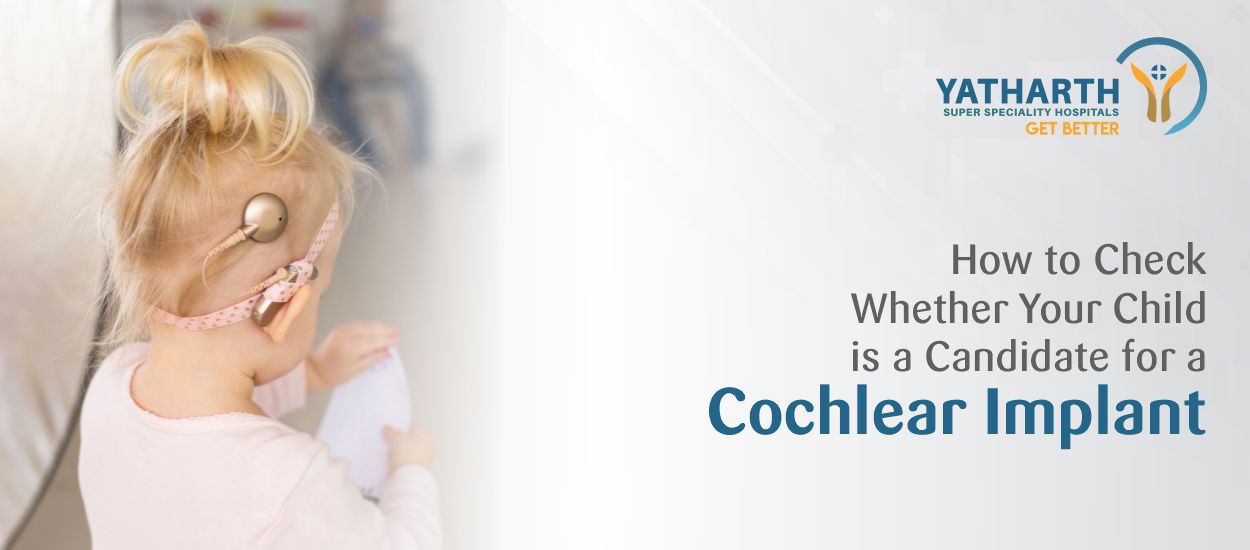
Cochlear Implant Surgery in Noida, India
Overview
A cochlear implant is a medical device designed to help individuals with severe to profound hearing loss. Unlike hearing aids that amplify sound, cochlear implants bypass damaged parts of the ear and directly stimulate the auditory nerve, allowing users to perceive sound.
What are the Components of Cochlear Implant?
- Sound is received by the microphone
- Sound is transmitted from the microphone to the speech processor, which digitalizes the sound into coded signals.
- Coded signals are then sent to a transmitter which sends across the skin into the internal implant and convert it into electrical signals.
- The signals are then sent to electrodes to stimulate the internal implant.
Signs and Symptoms
Cochlear implants are considered for individuals who:
- Have severe to profound hearing loss in both ears.
- Gain little or no benefit from hearing aids.
- Struggle to understand speech, even with hearing aids.
- Have a functional auditory nerve.
Types
Cochlear implants come in different models and configurations, typically involving:
- Unilateral Implants: Implanted in one ear.
- Bilateral Implants: Implanted in both ears, often done sequentially.
- Hybrid Implants: Combine cochlear implant technology with hearing aid features, suitable for individuals with residual low-frequency hearing.
Diagnosis
The process of diagnosing and evaluating a candidate for cochlear implants involves:
- Hearing Tests: Comprehensive audiometric tests to assess the degree of hearing loss.
- Medical Evaluation: Examination by an otolaryngologist (ENT specialist) to ensure no medical contraindications.
- Speech Perception Tests: Assess the ability to understand speech with and without hearing aids.
- Imaging: CT or MRI scans to evaluate the inner ear's anatomy and ensure it is suitable for implantation.
Treatment
Meditation
Meditation and mindfulness practices can support overall well-being and help manage stress and anxiety related to hearing loss and the implant process. These practices can be beneficial in adjusting to new auditory experiences post-surgery.
Surgery
The cochlear implant surgery involves:
- Pre-surgical Evaluation: Thorough examination and counseling about the benefits and risks.
- Surgical Procedure: A small incision is made behind the ear, and the internal component of the implant is inserted into the cochlea.
- Post-surgical Rehabilitation: Follow-up appointments to activate and adjust the external processor, along with auditory training and speech therapy.
Purpose of Psychological Assessment and Preoperative Counselling Before Cochlear Implant Surgery
The purpose of psychological assessment and preoperative counselling includes:
- Evaluating the Child's Intellectual Ability: To ensure the child is a suitable candidate for the implant.
- Identifying Family Issues: To address any family dynamics that may impact the implantation process and post-implant performance.
- Supporting Postoperative Program Delivery: To assist the family in implementing an intensive postoperative program, helping the child develop receptive and expressive oral language skills.
- Managing Expectations: To assess and adjust both the recipient's and family's expectations for the device. Unrealistic expectations can be modified prior to implantation.
Procedures for Cochlear Implant Surgery
Different surgical techniques are available for cochlear implant surgery:
- Implantation Surgery:
- Performed under general anesthesia to implant the internal components.
- The receiver/stimulator assembly is placed inside the temporal bone, and the electrodes are inserted into the cochlea to directly stimulate the hearing nerve.
- The procedure typically takes about one to two hours.
- Mapping & Switch-On:
- After three to four weeks, once the incision has healed, the programming of the speech processor is carried out.
- The external parts of the implant are connected, and the recipient begins to hear.
- Auditory Verbal Therapy:
- Children who have not been exposed to the hearing world undergo extensive rehabilitation to improve their speech, language, and hearing skills.
Conclusion
Cochlear implant surgery is a significant medical advancement that offers individuals with severe to profound hearing loss a chance to perceive sound and improve their communication skills. Through careful evaluation, psychological assessment, and preoperative counselling, candidates and their families can be well-prepared for the journey ahead. The surgical procedure, followed by a meticulous mapping process and auditory verbal therapy, ensures that recipients can maximize the benefits of the implant. With realistic expectations and a supportive postoperative program, cochlear implants can profoundly enhance the quality of life for those with hearing impairments, facilitating better integration into the hearing world.