Living with Parkinson's disease, essential tremor, dystonia, or other movement disorders can significantly impact everyday life. When medications no longer provide adequate symptom control or begin causing troublesome side effects, Deep Brain Stimulation (DBS) offers a safe and effective treatment option for carefully selected patients.
At Yatharth Hospital, our Department of Neurosciences provides comprehensive evaluation and advanced Deep Brain Stimulation (DBS) surgery using state-of-the-art technology and a multidisciplinary approach. Our experienced team of functional neurosurgeons, neurologists, neuro-anesthetists, neurophysiologists, radiologists, rehabilitation specialists, and critical care experts work together to deliver personalized care and improve patients' quality of life.
Whether you are experiencing severe tremors, stiffness, involuntary movements, or medication-related fluctuations, our team is committed to providing world-class neurological care close to home.
Deep Brain Stimulation (DBS) is an advanced functional neurosurgical procedure that helps control abnormal brain activity responsible for movement disorders. During the procedure, thin electrodes are implanted into specific areas of the brain. These electrodes connect to a small, battery-operated device called a neurostimulator (implantable pulse generator), which is placed beneath the skin of the chest.
The neurostimulator delivers carefully controlled electrical impulses that regulate abnormal brain signals, helping reduce symptoms such as tremors, rigidity, slowness of movement, and involuntary movements.
Unlike traditional brain surgery, DBS does not destroy brain tissue. It is adjustable, programmable, and reversible, allowing specialists to modify stimulation settings over time to meet each patient's needs.
DBS surgery is commonly recommended for patients with:
Each patient undergoes a detailed neurological assessment to determine whether DBS is the most appropriate treatment option.
Your neurologist may recommend Deep Brain Stimulation if you have:
DBS is generally considered after optimizing medical therapy and confirming that surgery is likely to improve symptom control.
For appropriately selected patients, DBS can offer significant improvements in daily functioning and quality of life.
Benefits include:
You may be a suitable candidate if you:
A multidisciplinary team carefully evaluates every patient before recommending DBS surgery.
A comprehensive evaluation is essential to ensure the best possible outcomes.
Our preoperative assessment includes:
This detailed evaluation helps identify the most appropriate brain target for electrode placement and confirms patient suitability for surgery.
High-resolution MRI and CT scans are performed to accurately map the brain and identify the optimal target area.
Using stereotactic navigation systems, the neurosurgeon creates small openings in the skull and carefully places thin electrodes into the targeted brain regions with exceptional precision.
A small pulse generator is implanted beneath the skin near the chest, similar to a cardiac pacemaker.
The implanted electrodes are connected to the neurostimulator through extension wires placed under the skin.
After recovery, the DBS system is activated and programmed according to the patient's symptoms. Multiple programming sessions help optimize stimulation for maximum benefit.
Most patients recover well following DBS surgery.
Recovery generally includes:
Improvement in symptoms may continue over several weeks as stimulation settings are fine-tuned.
Like any brain surgery, DBS carries certain risks, although serious complications are uncommon when performed by experienced specialists.
Potential risks include:
Most stimulation-related side effects can be managed through device reprogramming.
Following DBS surgery, patients continue regular follow-up with their neurologist and neurosurgeon.
Long-term care includes:
Many patients experience substantial improvements in independence, mobility, and overall quality of life.
Yatharth Hospital is committed to delivering advanced neurological care with a patient-centered approach.
Our highly skilled neurosurgeons have extensive experience in performing complex brain and spine surgeries, including functional neurosurgical procedures.
Patients benefit from coordinated care provided by neurologists, neurosurgeons, neuroradiologists, neuro-anesthetists, neurophysiologists, rehabilitation specialists, and critical care experts.
Our hospital is equipped with:
Every patient receives an individualized treatment plan based on detailed neurological evaluation and multidisciplinary discussion.
Our specialists provide customized DBS programming and regular follow-up to maximize symptom control and improve quality of life.
We offer integrated rehabilitation services including physiotherapy, occupational therapy, speech therapy, and long-term neurological care.
From diagnosis through recovery, our team focuses on compassionate care, patient education, and continuous support for patients and caregivers.
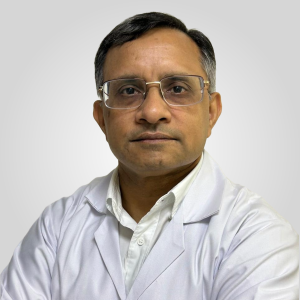
Verified by:
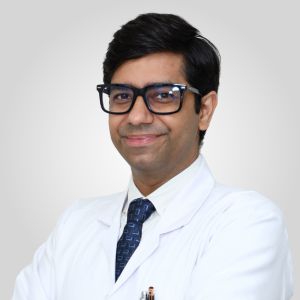
India’s leading specialists.
MBBS, MD (Internal Medicine), DM (Neurology)
Neurosciences
Neurology

MBBS, DNB (Neurosurgery), FINR (France)
Neurosciences
Neurosurgery
Interventional Spine
Neurointervention

MBBS, DNB (Neurosurgery)
Neurosciences
Neurosurgery
Becoming a mother again at 40 was emotional, but I felt completely safe in the hands of Dr. Sonal Bathla. Nancy Chadha shares her...

Becoming a mother again at 40 was emotional, but I felt completely safe in the h...

This video highlights the successful outcome of a Complex Total Knee Replacement...

Meet Mr. Satish Chand Chawla, who underwent HOLEP – Holmium Laser Enucleation ...

Meet Mrs. Nirmala Singh, who underwent a Successful Vaginal Hysterectomy Prolaps...
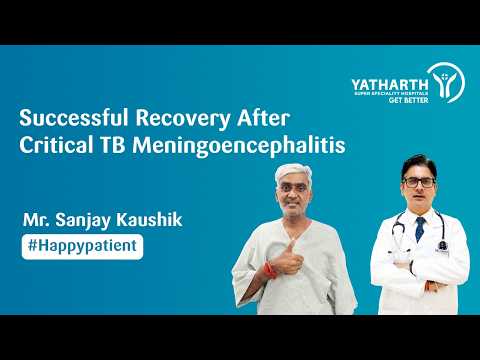
Mr. Sanjay Kaushik’s journey is a powerful story of hope and recovery after ba...
Here is a neurologist's guide to keeping your mind healthy and 4 ways to keep your brain healthy from the team of best n...
While Epilepsy is a chronic disorder marked by recurring seizures, seizures are abrupt, aberrant electrical discharges i...

Cervicogenic headaches are a common yet often misunderstood type of headache that originates from issues in the cervical...