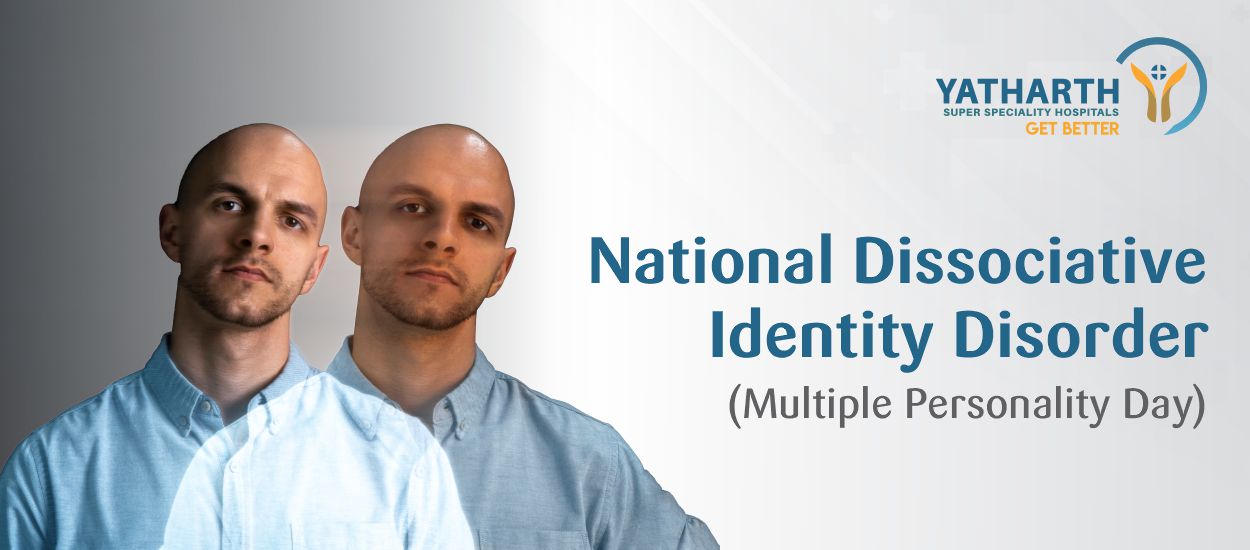


Multiple Personality Day is celebrated annually to raise awareness of one of the most misunderstood mental illnesses — Dissociative Identity Disorder (DID). In the year 2026, the day for this mental health awareness celebrates de-stigmatization, education, and compassion for those living with complex psychological trauma.
DID was previously known as Multiple Personality Disorder (MPD), but it is not about mood shifts or imaginary characters. It is a chronic mental health disorder with its roots in early trauma and adaptive survival strategies.
Multiple Personality Day and Why is it Celebrated?
Multiple Personality Day is an awareness day that informs the public about Dissociative Identity Disorder and what living with it is really like. It promotes discussion on mental health awareness and trauma healing.
The objective is straightforward, yet compelling — inform the public about, dispel myths regarding and foster compassion for. For decades, the media has fostered damaging stereotypes about DID. This awareness campaign counters myths and misinformation, and sheds light on the realities of those tormented by dissociation, fragmented by identity and left emotionally shattered .
MPD Awareness Day ties into the larger psychological well-being awareness campaign as a whole, helping to serve as a wake-up call to a world that mental illnesses are worthy of the same caring concern as physical ailment.
What is Dissociative Identity Disorder (DID)?
Dissociative identity disorder is a complex mental illness in which a person develops two or more distinct identity states known as “alters.” Each identity can have its own unique memories, behaviours, emotional responses, and ways of interacting with the world.
DID develops in early childhood, usually as a result of chronic or extreme trauma such as abuse, neglect, or living in an unsafe environment. When a child is trapped in these experiences, the brain invents dissociation as a survival tool.
DID is the mind’s survival strategy, not a defect. Eventually, these parts harden as separate layers of identity states.
Education about DID is critical to raising awareness that DID is a survival-based trauma and restoration solution, and not a fantasy, or attention-seeking conduct.
Why Awareness of DID is Important in 2026
With a global population on the rise and increasing challenges to mental health coming at a break neck speed, there are many disorders that still aren't well understood. DID awareness is so crucial because people suffer in silence for years — or even decades — before they are accurately diagnosed.
Most people with DID are diagnosed with anxiety, depression, bipolar disorder, or personality disorders, because of the similar symptoms they experience. Without treatment, people may experience problems with memory gaps, distress, harming themselves, and with relationships.
Several Multi Personality Awareness campaigns to help:
-
Support early diagnosis
-
Promote trauma-informed therapy
-
Decrease stigma and shame
-
Increase access to mental health services
-
Make communities safer for survivors
Let's make Multiple Personality Day 2026 count in moving the world toward more inclusive mental health support.
Truth vs Fiction About DID
Myth: People with DID are violent or dangerous
Truth: People with DID are far more likely to hurt themselves than hurt others as an outcome of trauma-related distress.
Myth: DID is very rare
Truth: Reality What it looks like: Research based on the general population indicates that a number of people experience dissociative identity disorder, but the vast majority of cases remain undiagnosed.
Myth: DID is made up for media entertainment
Truth: DID is a clinically recognized psychological disorder with decades of research.
Myth: Treatment is not an option
Truth: many people are capable of healing, and integrating, and leading more fulfilling lives with trauma focused therapy.
The facts about MPD and awareness raising activities have helped replace fear with science-based knowledge.
The Importance of Mental Health Awareness Days
Mental health awareness days, such as Multiple Personality Day and the Dissociative Identity Disorder Awareness Day, serve as vehicles for education, advocacy and emotional support.
They promote:
-
Open dialogue about trauma
-
Community compassion
-
Sharing of recovery narratives
-
Professional support
-
Workplace initiatives related to mental wellness
When psychological health awareness is part of the public discourse, people feel more comfortable to get help without fear of being judged.
How Families and Communities Can Help People with DID
Support is paramount in both recovery and emotional stability. Small gestures make a big impact.
How to provide support that makes a difference:
-
Listen without judging.
-
Educate yourself on trauma and dissociation.
-
Honor the emotional boundaries.
-
Support therapy, but don’t push them.
-
Don’t use language that might be dismissive.
-
Be patient with impaired recall.
Recognizing DID as a trauma response allows family and friends to exchange frustration for empathy.
Healing and Recovery Options
With appropriate care and long-term psychological support recovery can be done. Treatment typically involves trauma processing, emotional regulation, and work toward internal cooperation among identity states.
Standard therapy methods include:
Trauma-focused psychological therapy
Cognitive behavioural therapy (CBT) is a structured form of psychotherapy that has been proven effective in the treatment of depression and related illnesses.
Eye Movement Desensitization and Reprocessing (EMDR)
Techniques to Ground you when You’re Dissociated Since dissociation is a way to escape or self-protect from trauma when you look at being dissociated from driving and walking – you look at what can bring you back to yourself.
Mindfulness-Based Stress Control
The intention is not to “abolish” identities but to facilitate integration, stability, and emotional well-being. Mental health education makes therapy into a strength, not a weakness.
Conclusion
Multiple Personality Day 2026 is more than just informative — it’s about being human. Behind each diagnosis is an individual who endured extraordinary events and has adapted. DID is a sign of strength, not weakness. In understanding DID, we allow for safe healing, recovery, and emotional expansion.