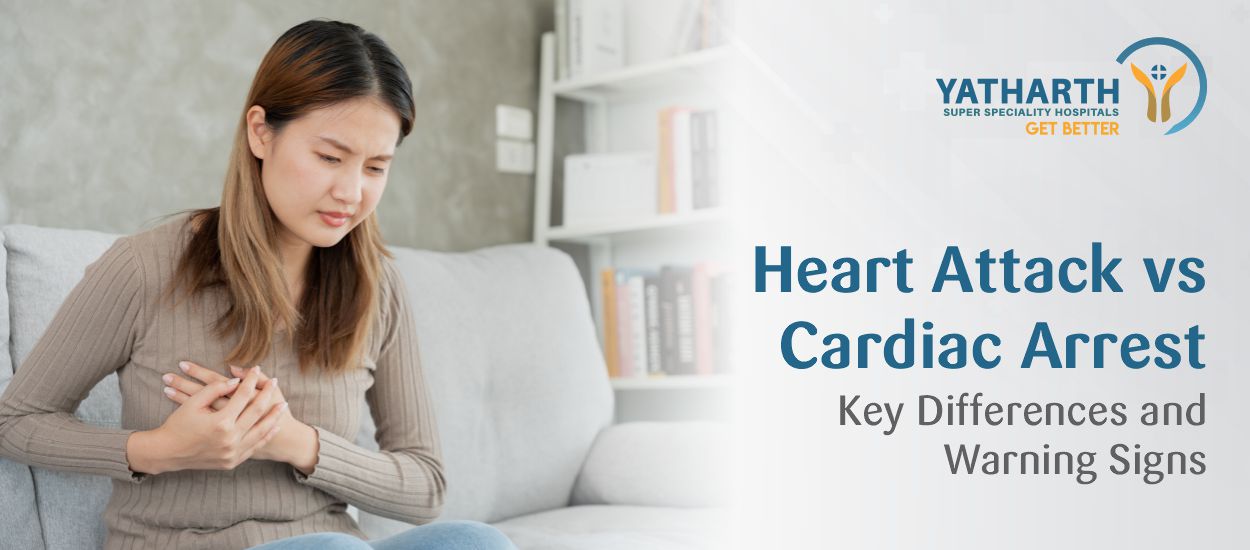


Heart attack and cardiac arrest are two of the most serious heart emergencies, and although the terms are often used interchangeably, they occur for entirely different reasons and demand different responses. A heart attack involves a blockage in blood flow to the heart muscle, whereas cardiac arrest is a sudden stoppage of the heart’s pumping action due to an electrical impulse failure. Understanding how these conditions differ, recognising their early warning signs, and seeking timely medical attention can play a crucial role in preventing complications and improving survival outcomes. To help, in this blog, we will explain the key differences between the two conditions, guide readers on how to respond during emergencies, and share preventive steps that can help lower the risk. Let’s start by understanding the basics.
What is a Heart Attack?
A heart attack occurs when blood flow to a part of the heart muscle becomes blocked, usually due to a build-up of fatty deposits known as plaque inside the coronary arteries. When this blockage prevents oxygen-rich blood from reaching the heart muscle, the affected area begins to get damaged. The longer the interruption continues, the more severe the damage becomes. A heart attack is a medical emergency and requires prompt treatment to restore blood flow and prevent complications such as heart failure or life-threatening rhythm disturbances.
What is a Cardiac Arrest?
Cardiac arrest is a sudden electrical malfunction in which the heart stops beating effectively. As a result, blood circulation comes to a halt, leading to an immediate loss of consciousness, absence of breathing, and no detectable pulse. This condition progresses within seconds and is fatal if CPR and defibrillation are not provided promptly.
Heart Attack vs Cardiac Arrest: Key Differences
|
Category |
Heart Attack |
Cardiac Arrest |
|---|---|---|
|
How the Condition Develops |
A blocked coronary artery restricts blood flow to the heart muscle, causing damage. |
The heart’s electrical system fails, stopping effective heartbeat and blood circulation. |
|
Primary Cause |
Plaque build-up (atherosclerosis), clot formation after plaque rupture. |
Severe arrhythmias such as ventricular fibrillation, electrical instability, or underlying heart disease. |
|
Risk Factors |
High blood pressure, high cholesterol, diabetes, smoking, obesity, sedentary lifestyle, stress, family history of heart disease, older age. |
Previous heart attack, cardiomyopathy, congenital heart disease, arrhythmias, severe electrolyte imbalance, trauma, drug overdose, respiratory failure. |
|
Symptoms |
Chest pain or pressure, pain radiating to the arm/jaw/neck, shortness of breath, sweating, nausea, fatigue. |
Sudden collapse, no breathing, no pulse, unresponsiveness. No warning symptoms in most cases. |
|
Symptoms in Women |
Unusual fatigue, indigestion-type discomfort, jaw pain, back pain, nausea, breathlessness—sometimes without chest pain. |
Not typically gender-specific; cardiac arrest presents the same way regardless of gender. |
|
Onset Pattern |
Often gradual; symptoms may appear minutes to hours before the event. |
Sudden and without warning; collapse occurs within seconds. |
|
Breathing & Pulse |
Usually present. |
Absent. |
|
Consciousness |
Often conscious, able to communicate symptoms. |
Immediately unresponsive. |
|
Immediate Priority |
Urgent hospital treatment to restore blood flow and limit damage. |
Immediate CPR and defibrillation to restart heart function. |
|
Life-Threat Impact |
Can lead to heart failure, arrhythmias, or cardiac arrest if untreated. |
Fatal within minutes without prompt intervention. |
The Link Between Heart Attack and Cardiac Arrest
Although heart attack and cardiac arrest are distinct conditions, they are closely connected in many medical emergencies. A severe heart attack can disrupt the heart’s electrical stability, triggering a dangerous rhythm disturbance such as ventricular fibrillation. When this occurs, the heart loses its ability to pump blood effectively, leading to cardiac arrest. This transition is one of the most common reasons people collapse suddenly during or shortly after a heart attack.
However, not all heart attacks result in cardiac arrest, and not all cardiac arrests are caused by heart attacks. Cardiac arrest may also occur due to structural heart disease, inherited rhythm disorders, trauma, or an imbalance in the body’s electrolytes. Recognising symptoms of a heart attack early and seeking immediate medical care helps reduce the risk of it progressing to cardiac arrest.
How to Respond in an Emergency
Knowing how to respond when someone shows signs of a heart attack or collapses due to cardiac arrest can make a life-saving difference. The first few minutes are critical, and acting quickly helps protect the heart, brain, and other vital organs.
If Someone Shows Heart Attack Symptoms
When a person experiences chest discomfort, breathlessness, or pain spreading to the arm or jaw, treat it as a potential heart attack. In such scenarios:
-
Stay calm and help the person sit in a comfortable position.
-
Call emergency medical services immediately.
-
Loosen tight clothing and keep the person still to reduce strain on the heart.
-
If the person has been prescribed aspirin and is not allergic, they may be advised to chew one while waiting for help.
-
Avoid giving food or water, and do not allow them to walk around.
Quick medical attention helps restore blood flow and prevents the condition from worsening.
If Someone Collapses Suddenly (Suspected Cardiac Arrest)
Cardiac arrest requires immediate action, as survival decreases with every passing minute. Here’s what to do in such scenarios:
-
Check for responsiveness by tapping and shouting.
-
If there is no response, call emergency services at once.
-
Check for normal breathing and pulse; if both are absent, begin CPR immediately.
-
If an automated external defibrillator (AED) is available, turn it on and follow the voice prompts.
-
Continue CPR until emergency help arrives or the person shows signs of recovery.
Immediate CPR and early defibrillation significantly improve the chances of survival.
How to Perform CPR: A Step-by-Step Guide
CPR, or cardiopulmonary resuscitation, is a life-saving technique that keeps blood flowing to the brain and vital organs when the heart stops beating. Anyone can learn CPR, and knowing these steps can make a critical difference during a cardiac arrest.
Step-by-Step CPR Instructions
1. Check if the Person Responds
-
Tap their shoulders and speak loudly.
-
If there is no response, move to the next step immediately.
2. Call Emergency Services
-
Dial emergency medical help right away.
-
If someone is nearby, ask them to call while you start CPR.
3. Check Breathing and Pulse
-
Look for normal breathing (not gasping).
-
Feel for a pulse for no more than 10 seconds.
-
If there is no breathing and no pulse, begin CPR at once.
4. Start Chest Compressions
-
Place the heel of your hand in the centre of the chest.
-
Put your other hand on top and lock your fingers.
-
Keep your arms straight and use your body weight.
-
Push hard and fast:
-
Depth: 5–6 cm
-
Rate: 100–120 compressions per minute
-
-
Allow the chest to return to its normal position after each push.
-
Do not stop unless absolutely necessary.
5. Use an AED (Defibrillator) if Available
-
Turn it on and follow the voice prompts.
-
Attach the pads as shown on the device diagrams.
-
Ensure no one is touching the person when the AED analyses the rhythm.
-
Deliver a shock only if instructed, then resume CPR immediately.
6. Continue Without Interruptions
-
Keep giving chest compressions until:
-
Emergency medical help arrives
-
The person starts breathing normally
-
An AED instructs you to stop
-
Even hands-only CPR (compressions without rescue breaths) can significantly improve survival when given promptly.
Diagnosis
Accurate diagnosis helps doctors determine whether a person has experienced a heart attack, a cardiac arrest, or both. Each condition requires different tests, especially because cardiac arrest is often diagnosed in an emergency setting.
How is a Heart Attack Diagnosed?
Doctors use a combination of clinical examination and tests to confirm a heart attack and understand the extent of damage. The diagnosis involve:
-
Electrocardiogram (ECG): Detects abnormal heart rhythms and patterns that indicate reduced blood flow.
-
Blood Tests (Cardiac Enzymes): Measures troponin levels, which rise when heart muscle is damaged.
-
Echocardiography: Shows how well the heart is pumping and identifies areas of weakness.
-
Coronary Angiography: Visualises blocked or narrowed arteries and guides treatment decisions.
-
Chest X-ray: Helps rule out lung-related symptoms and assess overall heart size.
These tests help pinpoint the location of blockage and guide urgent intervention.
How is Cardiac Arrest Evaluated?
Cardiac arrest is often identified immediately based on clinical signs, such as no pulse, no breathing, and unresponsiveness. After resuscitation, further tests help determine the cause. The diagnosis involve:
-
ECG and Continuous Rhythm Monitoring: Identifies the arrhythmia responsible for the arrest.
-
Blood Tests: Detect electrolyte imbalances, oxygen levels, and underlying medical conditions.
-
Echocardiography: Assesses heart structure and function after stabilisation.
-
Coronary Angiography: Used when a heart attack is suspected as the trigger.
-
Imaging Tests (CT/MRI): May be needed to evaluate brain or organ damage after prolonged cardiac arrest.
These evaluations help doctors stabilise the patient, treat the underlying cause, and prevent future episodes.
Treatment Options
Treatment for heart attack and cardiac arrest varies widely because each condition affects the heart in a different way. The goal of treatment is to restore normal heart function, prevent complications, and stabilise the individual as quickly as possible.
Heart Attack Treatment
Heart attack treatment focuses on restoring blood flow to the heart muscle and preventing further damage.
-
Medications to Improve Blood Flow: Doctors may use antiplatelets, blood thinners, beta blockers, nitrates, or cholesterol-lowering medicines to reduce strain on the heart and prevent clot formation.
-
Emergency Procedures:
-
Angioplasty and Stenting: A catheter opens the blocked artery, followed by the placement of a stent to keep it open.
-
Coronary Artery Bypass Surgery (CABG): A graft is used to reroute blood around the blocked artery in severe or multiple blockages.
-
-
Supportive Care: Oxygen therapy, pain relief, and continuous cardiac monitoring help stabilise the patient during recovery.
Prompt heart attack treatment reduces heart muscle damage and lowers the risk of cardiac arrest.
Cardiac Arrest Treatment
Cardiac arrest treatment is immediate and life-saving, requiring urgent intervention to restart the heart and restore circulation.
-
CPR (Cardiopulmonary Resuscitation): Maintains blood flow to the brain and vital organs until the heart can be restarted.
-
Defibrillation (AED or Manual Shock): Delivers an electric shock to correct life-threatening arrhythmias such as ventricular fibrillation.
-
Advanced Hospital Care: Once circulation returns, doctors provide:
-
Medications to stabilise heart rhythm
-
Mechanical ventilation if breathing is inadequate
-
Cooling therapy (targeted temperature management) to protect the brain
-
Treatment of the underlying cause, such as coronary angiography if a heart attack triggered the arrest
-
Effective cardiac arrest treatment within the first few minutes greatly improves survival chances.
Prevention and Risk Reduction
Preventing heart attack and cardiac arrest requires a combination of healthy lifestyle choices, regular medical check-ups, and timely management of underlying conditions. While some risk factors cannot be changed, many can be controlled through consistent habits and informed decision-making.
How to Reduce the Risk of Heart Attack
Several preventive steps help maintain healthy arteries and protect heart function.
-
Adopt a Heart-Healthy Diet: Include more fruits, vegetables, whole grains, nuts, and lean proteins. Limit salt, sugar, and saturated fats.
-
Exercise Regularly: Aim for at least 30 minutes of moderate physical activity most days of the week.
-
Quit Smoking: Tobacco is one of the leading preventable causes of heart attack.
-
Manage Medical Conditions: Keep blood pressure, cholesterol, diabetes , and thyroid levels under control with regular monitoring and treatment.
-
Maintain a Healthy Weight: Reduces pressure on the heart and improves overall cardiovascular health.
-
Reduce Stress Levels: Practise relaxation techniques such as deep breathing, meditation, or yoga.
How to Reduce the Risk of Cardiac Arrest
Heart attack and cardiac arrest cannot always be prevented, but early identification of risk factors and proactive medical care significantly reduce the likelihood of an emergency. Here’re some effective ways to reduce the risk:
-
Treat Heart Conditions Promptly: Heart failure, arrhythmias, and previous heart attack increase the risk of cardiac arrest.
-
Monitor Electrolyte Levels: Low potassium or magnesium can trigger dangerous heart rhythms.
-
Avoid Substance Misuse: Drug overdose and stimulant misuse can cause sudden arrhythmias.
-
Stay Aware of Family History: Inherited rhythm disorders may require specialised tests or medications.
-
Get Regular Check-Ups: Routine cardiac evaluations help detect problems early, especially in high-risk individuals.
Living With Heart Disease and Long-Term Recovery
Recovery after a heart attack or cardiac arrest extends beyond the hospital stay. Long-term care focuses on rebuilding strength, preventing future episodes, and supporting emotional wellbeing. With the right guidance, many individuals return to active, fulfilling lives. The key components of long-term recovery include:
Cardiac Rehabilitation
A structured cardiac rehabilitation programme helps individuals recover safely and improve overall heart health. It typically includes supervised exercise, lifestyle counselling, and education on managing risk factors. Rehabilitation strengthens the heart and lowers the chances of future complications.
Medication Adherence
Long-term medicines such as blood thinners, beta blockers, cholesterol-lowering drugs, and antiarrhythmics play a crucial role in protecting the heart. Taking them exactly as prescribed helps prevent clot formation, stabilise heart rhythms, and support proper heart function.
Regular Follow-Up Care
Scheduled check-ups allow doctors to track recovery progress, adjust medications, and identify any new or recurring symptoms early. These visits also help monitor blood pressure, cholesterol, and glucose levels, which are essential for long-term heart health.
Emotional and Mental Wellbeing
Many individuals experience anxiety, fear, or low mood after a major cardiac event. Seeking support from mental health professionals, joining support groups, or talking openly with loved ones can make recovery less overwhelming. Emotional health is an important part of healing.
Lifestyle Modifications
Maintaining heart-healthy habits supports long-term recovery. This includes nutritious eating, consistent physical activity, stress management, and quitting smoking if applicable. Small, daily changes can have a significant impact on heart strength and resilience.
With ongoing medical care and healthy lifestyle choices, individuals can manage heart disease effectively and reduce the likelihood of future emergencies.
Why Choose Yatharth Hospital for Heart Care?
Yatharth Hospital offers advanced, reliable, and timely cardiac care supported by experienced specialists and modern infrastructure. With highly-responsive emergency services and accredited facilities, the hospital is equipped to manage both heart attacks and cardiac arrest with precision and safety. We offer:
Experienced and Renowned Cardiologists
A team of highly-skilled and experienced cardiologists and critical-care experts provide accurate diagnosis, rapid intervention, and personalised treatment for all stages of heart disease.
Advanced Diagnosis and World-Class Infrastructure
State-of-the-art ICUs, modular operating theatres, high-end imaging, cardiac monitoring systems, and robotic-assisted surgical capabilities for safe and effective heart care.
Accredited and Quality-Focused
NABH- and JCI-accredited hospitals ensure high standards of patient safety, hygiene, and clinical excellence.
24×7 Emergency and Critical Care
Round-the-clock emergency teams, CPR and defibrillation readiness, and immediate access to specialists enable rapid response during cardiac crises.
Comprehensive Multispeciality Support
Seamless collaboration among cardiology , critical care unit, nephrology , neurology , and other departments ensures holistic treatment and smooth recovery.
Accessible Across Delhi NCR
Multiple centres and experienced cardiologists in Delhi NCR make specialised heart care easily accessible for individuals seeking timely medical attention.
Moving Forward with the Right Cardiac Care
Understanding the differences between a heart attack and cardiac arrest helps individuals recognise warning signs early and take timely action in an emergency. With experienced specialists, advanced diagnostic support, and 24×7 emergency services, Yatharth Hospital is equipped to manage both conditions with expertise and care. For guidance or urgent cardiac support, our team is here to help. For consultation call +91-9582833333 or 0120-2460000, and for emergencies, reach our 24×7 helpline at 1800-330-0000.