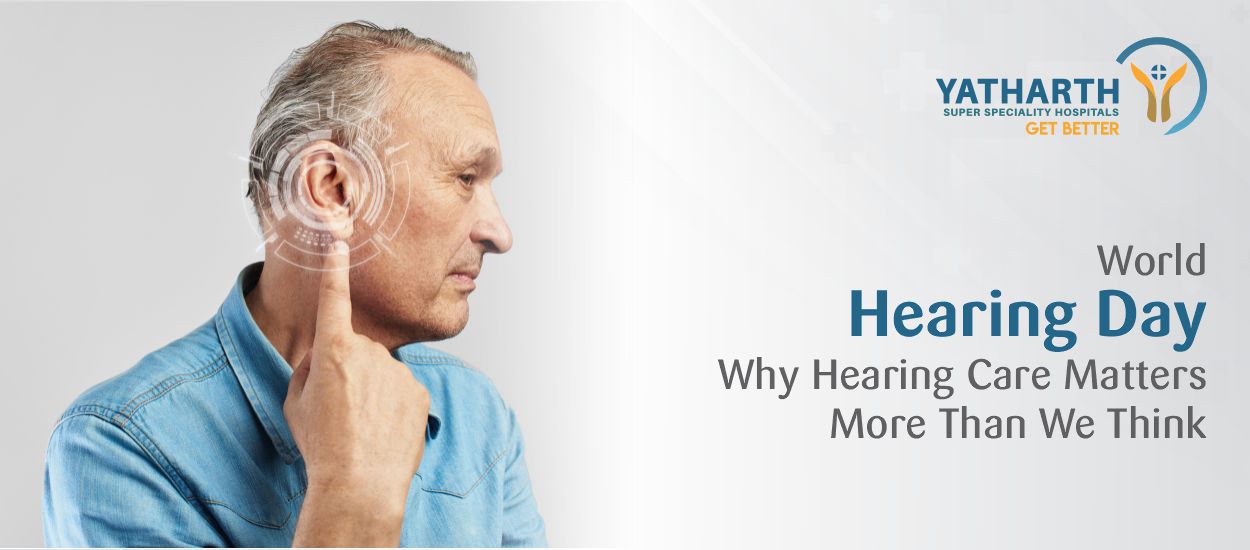


Every year on March 3rd, World Hearing Day is observed worldwide. It is not really a celebration. It is more like a reminder that hearing is not permanent unless we protect it.
Most people only think about their ears when they start experiencing pain. The truth is, hearing loss usually does not hurt. It grows slowly, and people adjust without noticing. One day, they realise the TV volume is always higher than before, or they keep asking others to repeat.
In 2026, the focus again stays on prevention, early testing and equal access to treatment. Hearing problems are no longer limited to old age. School students, office workers and even teenagers now face early signs because daily life has become louder than ever.
We live in a noisy world traffic, headphones, machines, music and we keep adding more noise to it.
What Is World Hearing Day?
World Hearing Day is a global awareness effort about ear and hearing care. Hospitals, schools and community groups use this day to explain how hearing loss begins and how it can be prevented.
The aim is simple: find problems early, promote safe listening habits and make hearing tests normal instead of ignored.
Another important message is inclusion. People with hearing difficulty should not feel separated in conversations, school or work just because others do not understand their struggle.
Why World Hearing Day 2026 Is Important
Hearing loss rarely happens suddenly. It starts with small signs people dismiss:
Someone repeats a sentence The phone volume keeps increasing Words become unclear in crowded places
Because the change is gradual, people delay testing. And delay often turns temporary damage into permanent loss.
Today many young adults experience hearing strain much earlier than previous generations. Continuous earphone use and long exposure to loud media are major reasons.
This day matters because awareness changes behaviour. Without awareness, people wait too long.
It helps people understand:
-
noise damage is rising everywhere
-
gadget habits are affecting teenagers
-
early testing protects hearing
-
hearing health affects confidence and mental well-being
When hearing reduces, communication reduces. And when communication reduces, social life slowly shrinks.
Common Causes of Hearing Loss
Many causes are part of normal daily routine, which is why people ignore them.
Frequent causes include:
-
Long exposure to loud sound (traffic, music, machines)
-
Untreated ear infections
-
Age-related nerve weakening
-
Earphones used at high volume for hours
-
Certain medicines affecting ear nerves
-
Cleaning ears with sharp objects
-
Moisture or poor ear hygiene
The risky part is these habits feel harmless until damage has already happened.
Early Warning Signs People Ignore
Hearing loss does not mean total deafness at first. The early stage is subtle.
Watch for signs like:
-
trouble understanding speech in noise
-
ringing sound (tinnitus)
-
increasing TV or phone volume again and again
-
ear pressure or discharge
-
feeling tired after conversations
If testing is done at this stage, treatment works much better. Waiting years leaves fewer options.
Daily Habits That Protect Hearing
Experts recommend small changes that make a big difference over time.
-
keep earphone volume moderate
-
follow the 60/60 rule (60% volume, 60 minutes max)
-
use ear protection in noisy workplaces
-
never insert keys, pins or matchsticks into ears
-
treat infections early
-
do a yearly hearing check
-
control diabetes and blood pressure
-
take breaks during long calls or gaming
Many people clean ears too aggressively. Ear wax is protective, not dirt. Removing it forcefully often causes injury.
Role of Hearing Specialists
Hearing problems cannot be judged correctly at home. Online tests or advice from friends often delay real treatment.
Audiology professionals help with:
-
proper hearing tests
-
selecting and fitting hearing aids
-
speech therapy for children
-
adjustment counseling
Sometimes hearing loss can be reversed but only if detected early.
Ignoring symptoms is usually the biggest mistake.
How Anyone Can Participate
You do not need medical training to support awareness.
Simple actions help:
-
get your hearing checked yearly
-
encourage family members to test
-
share safe listening habits
-
lower unnecessary loud music
-
teach children headphone safety
-
support people using hearing aids
Awareness spreads faster through people than posters.